
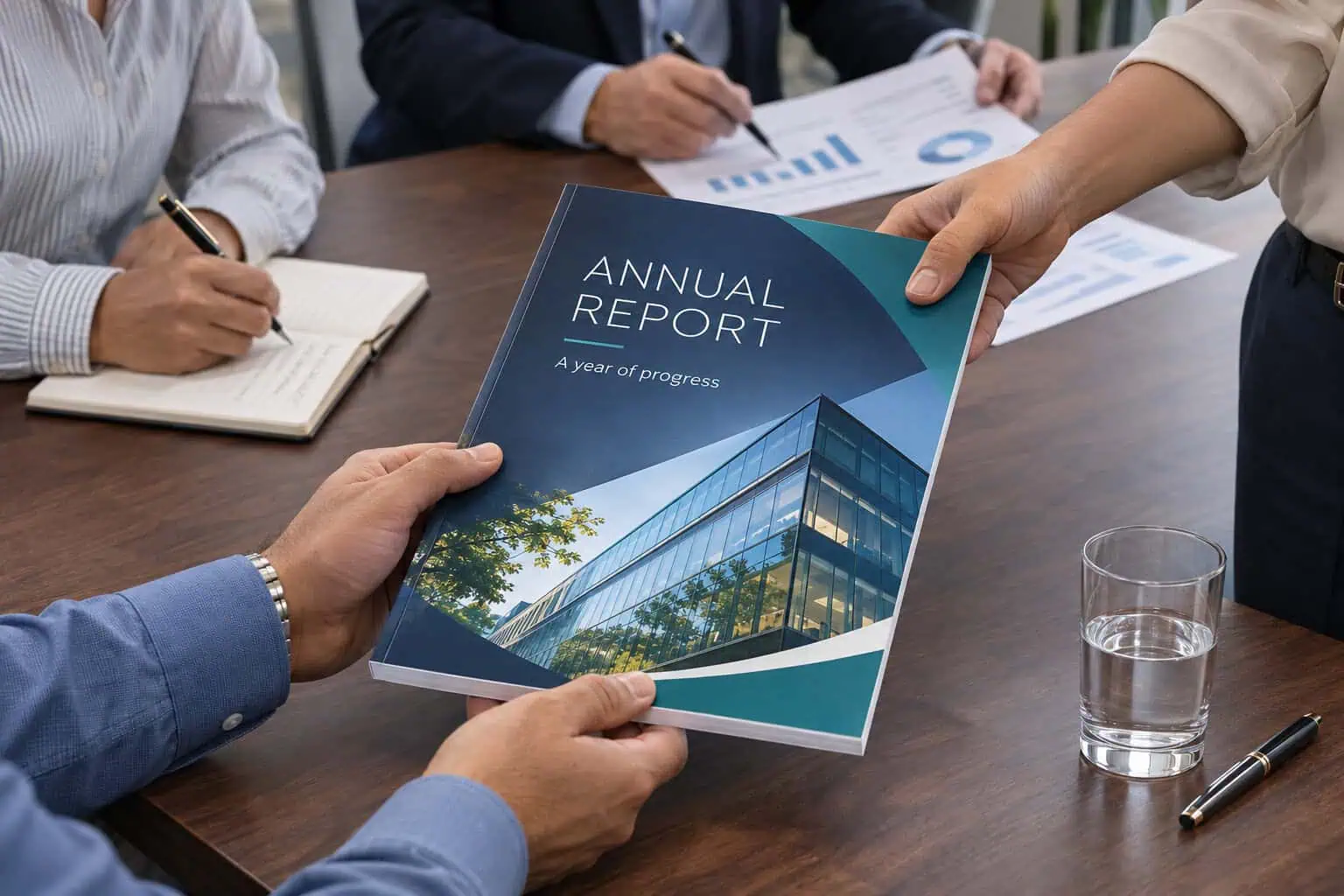
Annual report printing often lands on the calendar at the same time as year-end close, board meetings, and donor campaigns. When the schedule gets tight, the printed piece is usually where compromises happen. Planning a few key decisions now makes it far easier to deliver a report that looks polished, arrives on time, and stays on budget.
Why a Printed Annual Report Still Matters
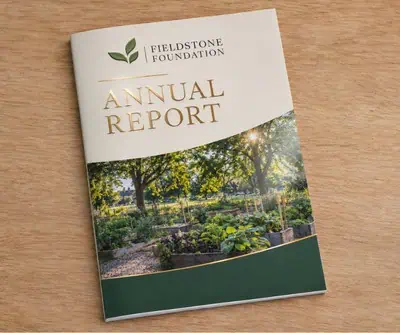
A digital PDF is easy to share, but a printed annual report carries weight that a screen cannot. Board members, investors, donors, and community partners tend to keep a well-made report, pass it along, and refer back to it. For nonprofits and universities in particular, the printed report is often a centerpiece of donor relations.
Many organizations do both: a printed version for key stakeholders and a PDF for the website and email.
Start Annual Report Printing With the Calendar
Work backward from your distribution date. Content and financials often finalize late, so build in time for design, at least one round of proofs, printing, binding, and mailing. If your report will be handed out at an annual meeting or gala, confirm that date with your printer early so production can be scheduled around it.
Key Decisions That Shape Cost and Quality
Page Count and Binding
Binding depends largely on page count. Saddle stitch binding, where folded sheets are stapled along the spine, is economical for shorter reports. Because each folded sheet creates four pages, the total page count needs to be a multiple of four. Perfect binding uses a glued, flat spine that can carry printed text, giving longer reports a more book-like finish.
Paper Stock
Paper choice affects how photos reproduce, how the report feels in hand, and what it costs to mail. Coated stocks keep images crisp, while uncoated stocks offer a warmer, more natural feel. Requesting printed samples is the most reliable way to compare.
Finishing
A soft-touch cover, spot coating, foil, or embossing can make the report feel premium without increasing page count. Finishes are best chosen during design so the artwork is set up correctly.
Quantity and Distribution
Estimate how many copies you need for meetings, mailings, and reserve stock. If the report is being mailed, ask your printer about addressing and mail preparation so the pieces go straight from press to post office.
Partner With a Printer Early
Bringing your printer into the conversation during design, rather than after files are final, helps avoid costly surprises with sizing, binding, and paper. RoyerComm has supported organizations across Philadelphia, South Jersey, and New York for more than 59 years with a consultative approach to every project. Learn more about our custom booklet printing and finishing options, and get in touch today to plan your report.
Frequently Asked Questions
How far in advance should we plan annual report printing?
Start planning as soon as your distribution date is set. Confirming specs and a production slot early leaves room for late content changes.
Should our annual report be saddle stitched or perfect bound?
Shorter reports are typically saddle stitched, while longer reports benefit from perfect binding and a printed spine. Your printer can advise based on final page count and paper.
Should we print our annual report or publish it online?
Many organizations do both, printing copies for key stakeholders and posting a PDF for broader reach.
Get in touch with RoyerComm today to discuss printing your upcoming Annual Report!