
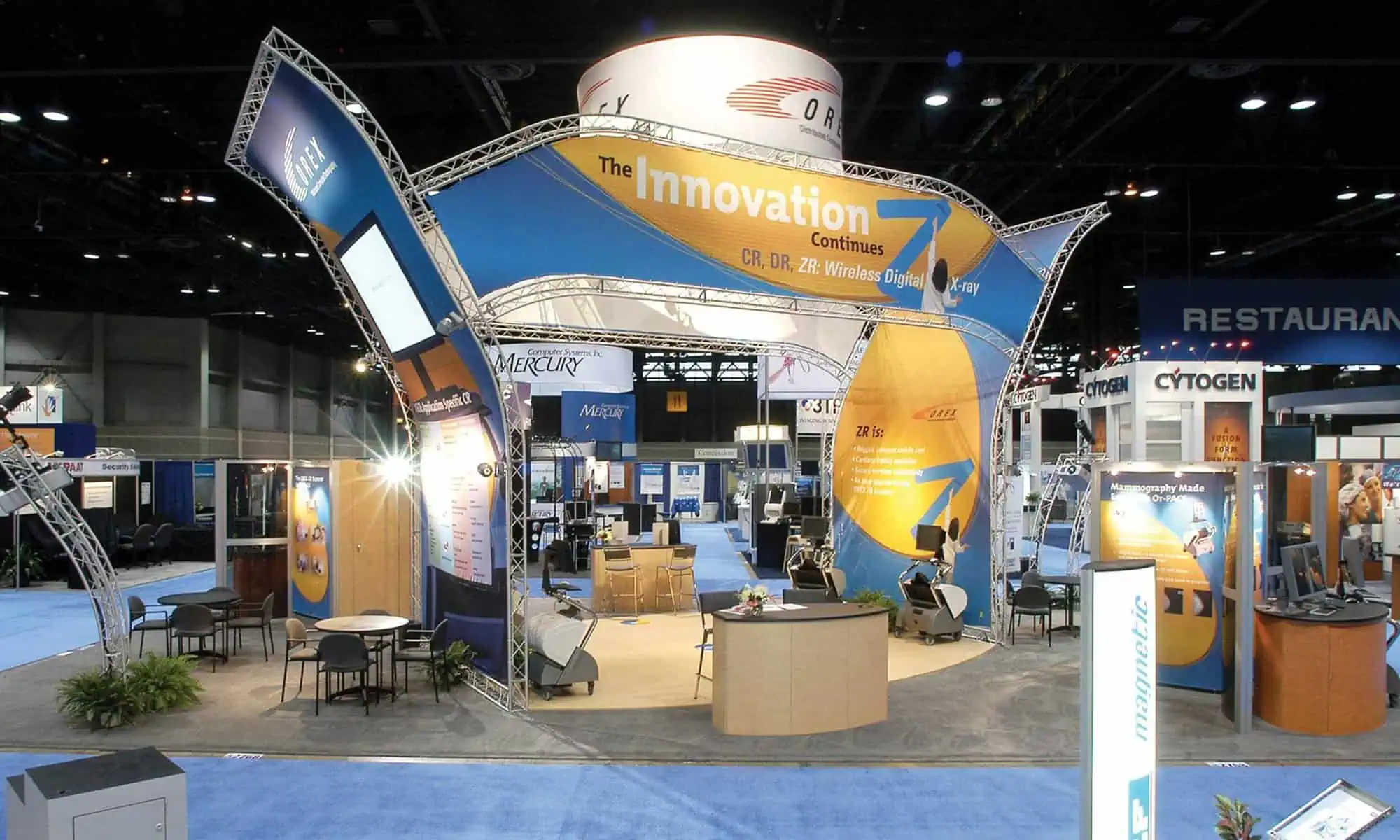
If you have ever invested in a trade show booth and watched people stroll by without stopping, you know how painful it is. You shipped the booth, trained the team, spent the money, and still did not get the foot traffic you were hoping for.
The good news: it is rarely about having a bigger booth or louder graphics. It is about having the right materials, designed with purpose, consistent branding, and a clear strategy for how each piece supports conversation and conversion.
At Royercomm, we partner with marketers, creative directors, and brand teams to design and produce trade show materials that do more than just look good. They work. Here is how to approach your next show so your print and display assets actually help fill your booth with the right people.
Start With the Strategy, Not the Backdrop
Before you think about fabric vs. rigid panels or what size retractable banner you want, get clear on three strategic questions:
- Who do you want to attract?
Are you targeting end users, distributors, procurement teams, or C-level decision makers? Each audience responds to different messages and visual cues. - What action do you want them to take?
Visit the booth, scan a QR code, schedule a demo, request a sample kit, sign up for a consult. Your print needs to be designed around that primary CTA. - Where will they see you first?
Aisle sightlines, corner vs. inline booth, height restrictions, and proximity to competitors all affect what should be most prominent.
Once these are defined, every piece of trade show collateral should support that strategy. Your booth graphics, back wall, counters, floor decals, and takeaways should all work as a single system, not one-off pieces ordered last minute.
Design Your Booth Like a Billboard, Not a Brochure
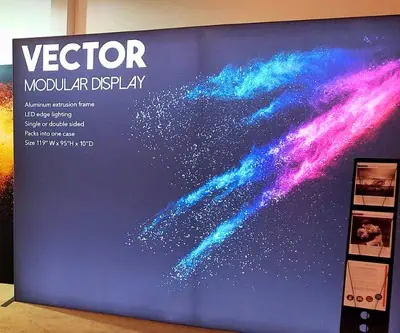
The biggest mistake we see is trying to cram an entire website onto a back wall. On a trade show floor, you have seconds to communicate what you do and why someone should stop.
A few design principles we use with clients:
- One core message, big and bold.
Think of your main header as a billboard. Twelve words or less. No one will read paragraph copy from 20 feet away. - Hierarchy that matches the attendee journey.
From the aisle, they should see: who you are, what you do, why it matters. Once they step in, more detail is appropriate on monitors, tabletop displays, and handouts. - High contrast, high clarity.
At a trade show, lighting is inconsistent and visual noise is everywhere. Use strong contrast, legible type, and avoid relying on subtle tonal shifts that might get washed out. - Use visuals that show outcomes, not just products.
Instead of only showing product imagery, show your solution in context. For example, for folding cartons, you might show a retail shelf where your packaging clearly stands out, to make the benefit instantly obvious.
Align All Printed Pieces With a Clear Attendee Path
Think of your materials as touchpoints along a small funnel, not random pieces of print. A simple attendee path might look like this:
- Attract: Large format graphics, hanging signs, and banner stands pull eyes from the aisle.
- Engage: Counter cards, demo station graphics, and short-form brochures give enough information to start a conversation.
- Convert: Detailed sell sheets, sample kits (including folding cartons or labels), and follow-up cards provide what prospects need after the show.
For each stage, ask:
- What is the one thing this piece needs to communicate?
- How will it be used by the booth staff?
- What do we want the attendee to do after interacting with it?
When Royercomm works with clients on trade show packages, we often build a “materials map” that makes sure there are no gaps. For example, a client might have a beautiful back wall and a solid brochure, but nothing that highlights a trade show exclusive offer, or no simple takeaway for a quick passerby. That is where we add focused pieces like postcard-sized handouts, door hangers for hotel drops, or small folding carton samples that double as branded giveaways.
Use Folding Cartons and Print as Tactile Experience, Not Just Decoration
If your brand uses folding cartons, labels, or other packaging, trade shows are a perfect opportunity to turn packaging into a hands-on experience.
A few ways we see savvy brands doing this:
- Sample box series.
Instead of one generic sample, provide a small series of folding cartons that show different print techniques: foil stamping, spot UV, soft-touch coatings, or unique structural designs. This positions your brand as premium and gives prospects something to physically interact with. - Functional giveaways.
Small folding cartons that hold mints, snacks, or branded items not only look good on the booth counter, they travel through the show floor and hotel with your branding intact. - Story-driven packaging.
Printed inserts or short on-pack storytelling can reinforce your value proposition. For example, a simple inner panel in a sample carton explaining your sustainability credentials, your quality control process, or your short-run capabilities.
As a commercial printer with deep experience in folding carton production, Royercomm can help you design packaging that shows off your print technology and supports your sales narrative rather than just being a container.
Do Not Ignore Finishing, Substrates, and Durability
Trade show graphics take a beating. They are shipped, unpacked, handled by multiple people, and re-used for multiple events. This is where print buying experience really pays off.
When we consult with clients, we look at:
- Substrates that match your use case.
Fabric graphics, rigid boards, and rollable vinyl each have different strengths. A tension fabric display might be perfect for a lightweight, frequently shipped kit, while rigid panels might be better for a long-term modular system. - Finishing that protects your investment.
Laminates, coatings, and edge finishing can extend the life of your graphics. Scuff-resistant and anti-glare finishes can make a big difference under harsh exhibit hall lighting. - Color management across pieces.
Booth walls, counters, brochures, and folding cartons should all align visually. That means careful color profiling and press checks when color accuracy is critical. A brand that looks different on every piece looks less credible. - Modularity and reconfigurability.
If you attend multiple shows with different booth sizes, we can help you design a graphic system that scales. For example, a back wall that works as a 10×10, but can be expanded for a 10×20 with additional panels.
This is where working with a print partner, not a one-time vendor, really matters. We track your specs, substrates, and brand standards so you can reuse and adapt materials over several show cycles.
Integrate Digital Touchpoints Without Losing the Human Element
Trade shows are physical, but the most effective booths blend print and digital. Your materials should make it easy for attendees to continue the conversation after they leave.

- QR codes with intentional destinations.
Rather than dumping visitors on your home page, point codes to a show-specific landing page, a downloadable spec sheet, a video demo, or a sample request form. - Printed lead capture aids.
Simple cards with checkboxes for areas of interest, or pre-printed appointment cards, can speed up conversations and reduce friction for your sales team. - Show-specific offers highlighted on print.
Post-show follow-up is easier when your trade show specials are clearly printed and consistent with your email and digital campaigns.
Our team can help you coordinate the print pieces so they complement what your digital marketing team is doing, and so everything feels cohesive from the attendee perspective.
Train Your Team to Use the Materials, Not Work Around Them
Even the best designed booth will underperform if the staff does not know how to use the materials. A quick pre-show huddle can go a long way:
- Walk the team through the graphic hierarchy so they know what message to lead with.
- Show how each printed piece is meant to be used, and which personas each one fits.
- Make sure everyone knows the CTAs and how prospects can take the next step.
We often provide our clients with a simple “booth playbook” that explains each piece in the trade show kit. This creates consistency in how materials are used from show to show, even if staff changes.
Work With a Partner That Thinks Beyond the Print File
At Royercomm, we see ourselves as an extension of your marketing team. We do not just print what you send and ship it off. We ask questions about your show calendar, your target accounts, and the experience you want attendees to have.
That partnership mindset shows up in a few ways:
- Early consultation on booth layout, materials, and messaging.
- Recommendations on substrates, formats, and quantities based on your budget and goals.
- Color and quality management across every piece, from large format graphics to folding cartons and handouts.
- Long-term planning so you can build a library of reusable, modular trade show assets.
If you are planning your next show and want your materials to do more than just fill space, we would be glad to help you design a trade show presence that actually pulls people into your booth and supports real business conversations.
Trade shows are a serious investment. With the right strategy, design, and print partner, your materials can pull their weight and then some.