
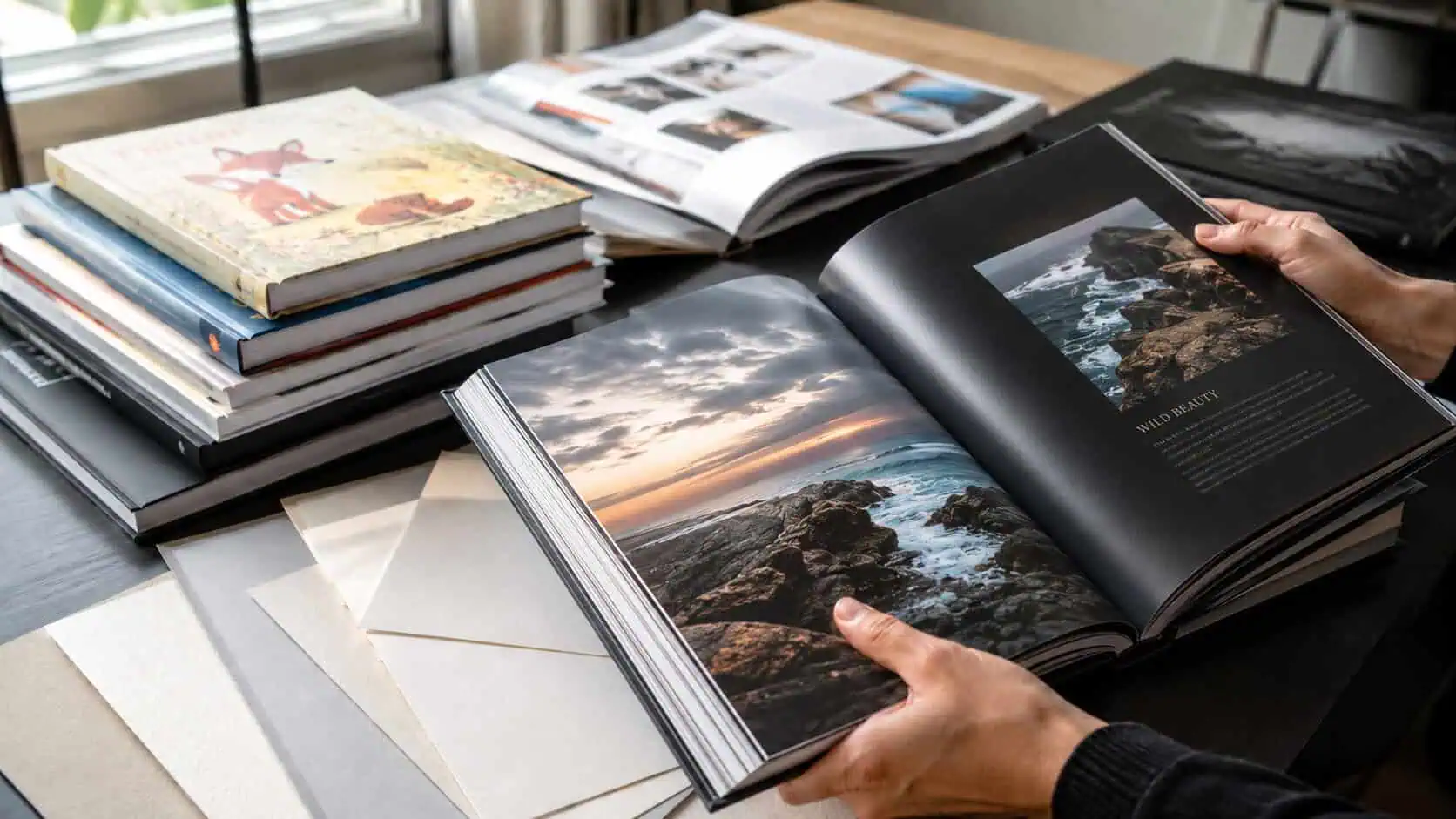
Whether you’re printing a company history, a training manual, a children’s book, a photography collection, or a self-published title, selecting the right paper is one of the most important decisions you’ll make during the book production process.
Paper influences everything from the look and feel of your book to its durability, readability, and overall perceived value. While cover design often gets the most attention, the paper inside can have an even bigger impact on the reader’s experience.
If you’re planning a short run book printing project, here’s what you should know when choosing paper for your book.

Start With Your Book’s Purpose
Before selecting a paper stock, consider how the book will be used.
A training manual that will be referenced daily has different requirements than a coffee table book designed to showcase photography. A children’s book may need heavier, more durable pages, while a novel is typically printed on lighter stocks that keep production costs manageable.
Ask yourself:
- Will the book be read once or used repeatedly?
- Will it contain photographs or primarily text?
- Does it need to feel premium or practical?
- How important is weight and portability?
The answers will help narrow your paper options quickly.
Understanding Paper Weight
One of the first specifications you’ll encounter is paper weight.
For most text-heavy books, interior pages are commonly printed on stocks ranging from 50 lb. to 80 lb. text weight. Heavier papers create a more substantial feel but can significantly increase the thickness and weight of the finished book.
For example:
- 60 lb. text offers a lightweight, economical solution for manuals and novels.
- 70 lb. text provides a balance of durability and readability.
- 80 lb. text creates a premium feel often used for high-end publications.
The right choice depends on your content, budget, and desired presentation.
Coated vs. Uncoated Paper
Another major consideration is whether to use coated or uncoated paper.
Uncoated Paper
Uncoated paper has a natural, matte appearance and is often preferred for:
- Novels
- Educational materials
- Workbooks
- Journals
- Business books
Because it reduces glare and feels more tactile, many readers find uncoated stocks easier to read for long periods.
Coated Paper
Coated paper features a smooth finish that helps images reproduce with greater sharpness and color accuracy.
It’s commonly used for:
- Photography books
- Art books
- Product catalogs
- Children’s books with vibrant illustrations
- Corporate publications with heavy graphics
If your project relies heavily on visual impact, coated paper is often worth considering.

Brightness Matters More Than You Think
Paper brightness affects how text and images appear on the page.
Brighter white papers create stronger contrast and make colors appear more vibrant. However, they can sometimes feel harsh for extended reading.
Many novels and long-form books use slightly softer white or cream-colored papers because they are easier on the eyes and create a more traditional reading experience.
The best choice depends on your audience and the overall aesthetic you’re trying to achieve.
Consider Opacity
Opacity refers to how much show-through occurs from one side of the page to the other.
Lower-opacity papers may allow text or images to be visible through the page, which can distract readers. This becomes particularly important when printing books with heavy graphics or dark imagery.
For books with significant image coverage, choosing a paper with higher opacity can dramatically improve readability and presentation.
Matching the Cover to the Interior
The cover stock should complement the interior pages.
A premium interior paired with a lightweight cover can feel unbalanced. Likewise, an exceptionally heavy cover may feel excessive for a simple manual or workbook.
Many short run book printing projects use:
- 10 pt. to 12 pt. cover stock for standard books
- Heavier covers for premium editions
- Matte or gloss coatings for added durability and visual appeal
A well-matched cover and interior create a cohesive finished product that feels professionally produced.
Request Paper Samples Before You Commit
Paper specifications on a screen only tell part of the story.
Whenever possible, ask to see physical paper samples before finalizing your project. Holding different stocks side by side allows you to compare texture, brightness, thickness, and overall feel in a way that digital proofs simply cannot replicate.
This step often prevents costly surprises and helps ensure the finished book aligns with your vision.
Why Short Run Book Printing Requires Expert Guidance
When printing thousands of copies, small paper decisions get amplified across a large production run. However, short run book printing offers flexibility to experiment with different materials and create a product tailored to your specific audience.
An experienced print partner can help you balance appearance, performance, and budget while recommending stocks that align with your goals.
At RoyerComm, we work with publishers, designers, businesses, authors, and organizations to produce high-quality short run books that make the right impression. From selecting paper stocks to binding options and finishing techniques, our team helps guide projects from concept to completion so you can feel confident in the final product.
If you’re planning a book project and aren’t sure which paper is right for your application, we’re always happy to help explore the options. Get in touch with our team today!