
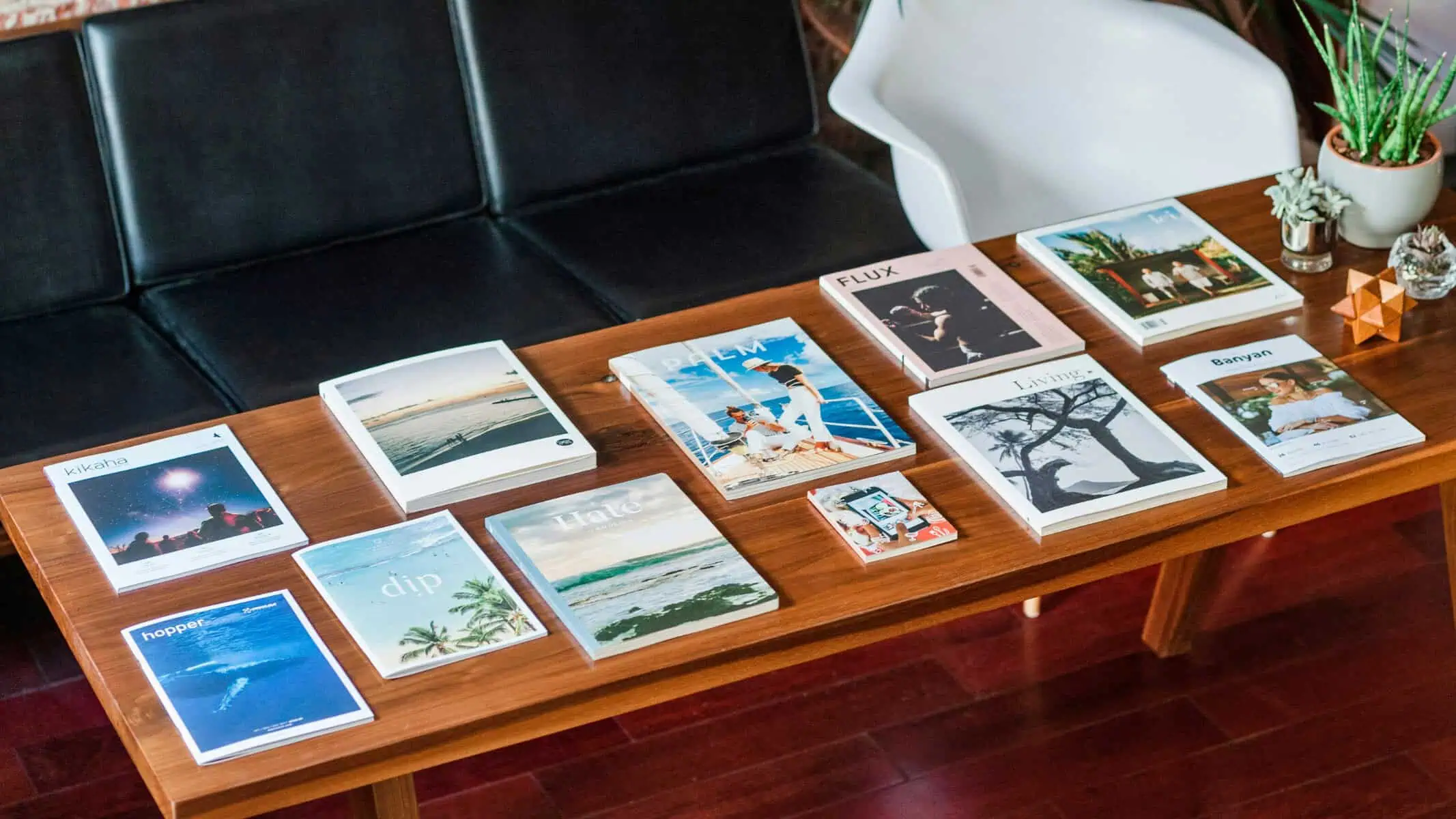
There is a moment that every serious creative buyer knows. The moment a client holds something printed, properly produced, and physically substantial, and the conversation shifts. The presentation is no longer a proposal. It is a statement. A printed book, done right, does that.
The question is not what short run book printing is. You know that. The question is when a printed book creates maximum impact, and what production decisions make the difference between something that commands a room and something that lands in a recycling bin.
The Book as Brand Artifact
The most powerful use of short run book printing today has almost nothing to do with publishing in the traditional sense. It is about brands treating a printed book as a designed object, a physical expression of who they are and what they stand for.
Architecture firms produce monographs of completed work that function as both portfolio and credential. Fashion labels print seasonal lookbooks on stocks so considered that the paper itself becomes part of the narrative. Law firms and financial advisors create custom-bound capability documents that end up on client shelves rather than in desk drawers. Product companies mark significant launches with limited edition books that double as collector pieces. Agencies present campaign concepts in bound form because a loose slide deck does not carry the same authority.
In each case, the book is not documentation. It is persuasion made physical.

When Printed Books Create Maximum Impact
When You Need Something That Persists
A PDF is easy to close, easier to forget. A well-produced book occupies space. It sits on the conference table after the meeting is over. It moves from desk to shelf. It gets passed to a colleague. Physical objects have a staying power that digital files do not, and in a new business or client retention context, that persistence translates directly to top-of-mind presence.
When the Audience Has High Visual Standards
If your clients are designers, creative directors, brand managers, or anyone who makes their living evaluating visual quality, a mediocre printed piece actively works against you. But the inverse is equally true: a beautifully produced book signals that you pay attention to the same details your clients do. It speaks their language before you say a word.
When You Are Marking Something That Matters
Anniversaries. Launches. Acquisitions. Award seasons. Campaign conclusions. Events that have meaning deserve artifacts that reflect that meaning. A short run commemorative book, properly designed and produced, gives stakeholders something to hold that connects them to the moment. That is not sentimentality. That is smart brand building.
When the Content Is Too Important for a Screen
There is research on this. Readers retain information better from physical print than from screens. Comprehension is higher. Emotional engagement is higher. If your content is meant to genuinely educate, persuade, or move someone, put it on paper. This applies to annual reports, donor communications, thought leadership pieces, and any content where depth of engagement matters more than volume of impressions.
When the Number of Recipients Is Small and the Stakes Are High
Short run printing makes sense precisely because the audience is finite. Fifty copies for a new business pitch. One hundred for a board presentation. Two hundred fifty for a client gift program. The low quantity is not a constraint. It is the point. A limited print run signals exclusivity, and exclusivity signals value.
The Production Decisions That Define the Piece
This is where short run books either earn their keep or fall short. The physical production choices communicate as clearly as the content.
Paper Stock
The substrate is not a background detail. It is an active design element. Uncoated stocks read as editorial and intellectual. Coated stocks handle photography with precision and richness. Textured stocks add tactile dimension that photographs cannot convey. Weight affects perception of quality as directly as visual design does. A knowledgeable buyer asks for paper samples, not just specs, because the hands know things the monitor cannot tell you.
Binding
Perfect binding reads as authoritative and finished. Lay-flat binding is the right call when the content demands full spread viewing, for photography books, architectural portfolios, lookbooks. Swiss binding and exposed-spine binding are distinctive enough to themselves communicate craft. Saddle-stitching is efficient and clean for thinner pieces. The binding is a structural decision with aesthetic consequences, and it deserves as much attention as the cover design.
Cover Treatment
A soft-touch laminate changes the entire sensory experience of handling a book. Spot UV on select elements creates a contrast between matte and gloss that rewards attention. Foil stamping on a cover, when executed with restraint, signals production investment without announcing it. Blind embossing adds dimension and tactility that photographs consistently fail to reproduce. These are not decorative additions. They are signals to the audience about how seriously you took this.
Size and Proportion
Standard sizes are standard for a reason, cost efficiency. But a considered departure from standard trim size is one of the fastest ways to make a book feel deliberate rather than default. A square format. A narrow vertical. An oversized horizontal. Format is a design decision that begins before the first page is laid out, and changing it late costs time and money. Build format into the brief from the start.
Working with the Right Printer
Short run book printing at this level requires a printer who understands that the conversation is not just about specifications. It is about intent. What is this book supposed to accomplish? What should it feel like in someone’s hands? What does it need to say before the reader opens the cover?
The right printer asks those questions and brings knowledge to the answers. They flag when a paper choice will fight the design. They show you samples before you commit. They understand color management well enough to protect your brand standards across a production run. They treat a short run of one hundred books with the same rigor as a long run of one hundred thousand.
At RoyerComm, that is how we approach every job. We match the press to the project. We consult on paper and binding. We keep you in the loop through every stage of production. Our clients are not buying copies of a book. They are buying a result.
Frequently Asked Questions
What quantity makes sense for a short run book?
It depends entirely on the use case. New business presentations might call for ten to fifty copies. Client gift programs might run two hundred fifty to five hundred. There is no minimum that is too small if the strategic purpose justifies the per-unit cost. Start with the goal, then work backward to the quantity.
How far in advance should I plan a short run book project?
For a well-executed project with proper creative review and production stages, plan for four to six weeks from print-ready files to delivery. Complex finishing treatments, specialty stocks, or custom binding can extend that timeline. Rush production is possible but carries real risk on a high-finish piece.
Can short run books match the quality of longer press runs?
On modern digital presses, absolutely. Color accuracy and consistency on short run digital production have closed the gap with offset significantly. For certain finishing treatments, offset still has advantages, and a good printer will tell you honestly when a longer run is the better technical answer.
What file specs should I follow for book printing?
Provide press-ready PDFs with embedded fonts, CMYK color mode, 300 DPI images, and proper bleed on all live edges. Your printer should provide a specification sheet at project kickoff. If your designer is working in RGB, that conversion needs to happen before final files are submitted, not after.
How do I know which paper is right for my project?
Ask for samples. Any printer worth working with can provide physical paper samples so you can evaluate weight, texture, and how the stock handles color before you commit. At RoyerComm, we offer a free paper sample book for exactly this reason.
Ready to Make Something Worth Keeping?
If you have a project where the printed piece needs to carry real weight, creatively and strategically, bring it to RoyerComm. We work with print buyers, art directors, and brand teams who know what they want and need a production partner who can deliver it at the level the work demands.
Request a quote or call us to talk through your project. We will ask the right questions and give you straight answers.
Request a Quote | Call 800.605.7693 ext. 11