
Ask people whether they think direct mail is effective, and you’ll get a predictable answer: “Doesn’t everyone just throw that stuff away?” It’s a reasonable assumption in a world saturated with physical mail. But it’s also wrong and the data proves it in a way that surprises most marketers the first time they look carefully at the numbers.
Direct mail is not only still working: for many businesses, it’s working better than most digital channels. Here’s why, and what you need to know to make it work for yours.
The Numbers Don’t Lie: Direct Mail Response Rates
Let’s start with the data. According to the Data & Marketing Association (DMA), direct mail achieves an average response rate of 4.4% for prospect lists and 9% for house (customer) lists. Compare that to average email click-through rates that hover around 1–3% and digital display ads that routinely see click rates below 0.5%, and the picture becomes clearer.
The USPS reports that 57% of people say direct mail makes them feel more valued as a customer. And studies from the Epsilon Data & Technology and other research firms consistently show that physical mail is better remembered than digital advertising and consumers spend more time with it and recall it at higher rates after the fact.
The return on investment is competitive too. The DMA has reported direct mail ROI averaging around 29%! Which is comparable to, and in many cases exceeding, social media and paid search in certain categories.
Why Direct Mail Is Having a Moment Right Now
There’s a paradox at work in today’s marketing landscape. Consumers are drowning in digital content: spam emails, retargeting ads, social media promotions, push notifications. The sheer volume has created something marketers call “digital fatigue,” and it’s pushing response rates down across digital channels while making the physical mailbox feel, by comparison, almost refreshingly uncrowded.
Think about it: how many emails do you receive in a day? Hundreds? How many pieces of physical mail? Maybe five or ten. In that context, a well-designed, well-targeted direct mail piece has far less competition for attention than a digital ad fighting thousands of other impressions.
This dynamic is particularly pronounced among certain demographics. Younger consumers like Gen Z and millennials have grown up in a world of digital advertising. For many of them, physical mail is actually novel and engaging, not something they associate with spam. Several studies have found that millennials engage with direct mail at surprisingly high rates, viewing it as more trustworthy than digital advertising.
Direct Mail vs. Email Marketing: A Honest Comparison
Both channels have their place and the smartest marketers use both. But let’s look at how they actually compare:
Response Rates
Direct mail wins decisively. The average direct mail response rate of 4.4% easily outpaces the average email click-through rate of 1–3%, and the gap widens further when you compare direct mail to email open rates in competitive industries where inboxes are saturated.
Engagement Quality
People spend an average of 25 minutes reading their physical mail, according to USPS research. Email engagement is typically measured in seconds. Physical mail engages multiple senses… touch, sight, even smell with specialty coatings: creating a more memorable experience.
Deliverability
Email deliverability has become a persistent challenge. Spam filters, promotions tabs, and changing consumer email habits mean your carefully crafted email may never reach the inbox. Direct mail, sent to a physical address, doesn’t have this problem. It arrives.
Trust
Consumers consistently rate physical mail as more trustworthy than digital advertising. In a marketing environment where credibility is increasingly valuable, this matters.
Cost
Email wins here — it’s cheaper to send, especially at scale. But cost-per-response and cost-per-acquisition tell a different story. When you factor in direct mail’s higher response rates, the math often comes out more favorably than the raw cost comparison suggests.
What Makes Direct Mail Effective? The Key Variables
Not all direct mail campaigns are equal. The ones that deliver strong ROI share a few characteristics:
Targeted, Clean Mailing Lists
The single most important variable in a direct mail campaign is list quality. Sending the right message to the wrong people guarantees poor results. Invest in a targeted, accurate, properly segmented mailing list — this is where many campaigns win or lose.
A Compelling Offer
Your direct mail piece needs a reason for the recipient to act — a discount, a free consultation, a limited-time offer, an exclusive invitation. Clear, compelling offers dramatically increase response rates.
Strong Creative
Design and copy matter enormously. A piece that looks professional, communicates clearly, and speaks directly to the recipient’s needs and interests will dramatically outperform a generic, cluttered design.
A Clear Call to Action
What do you want the recipient to do? Call a number, visit a website, scan a QR code, return a reply card? Make the desired action unmistakably clear, easy to take, and compelling.
Consistent Follow-Up
Direct mail rarely works in a single touch. The most effective campaigns use multiple mailings and often integrate with digital channels, retargeting mail recipients with online ads for a coordinated multichannel effect.
Industries Where Direct Mail Consistently Performs
Direct mail works across industries, but it’s particularly well-established in certain categories:
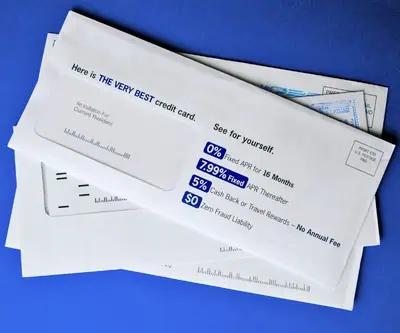
Financial services: Credit card offers, insurance, mortgage, and investment solicitations have driven direct mail volume for decades because they work. Healthcare: Patient outreach, appointment reminders, and health plan communications are increasingly delivered by mail, both for compliance reasons and effectiveness. Real estate: Farming neighborhoods with regular mailers is a time-tested tactic for real estate agents, and it continues to produce results. Retail: Sale announcements, catalogs, and promotional offers drive in-store and online traffic. Nonprofits: Fundraising appeals sent by mail consistently outperform digital appeals in average gift size and donor retention. Home services: HVAC, plumbing, landscaping, pest control — service businesses of all kinds use direct mail to reach homeowners in their service area.
Measuring Direct Mail Effectiveness
One persistent knock on direct mail is that it’s hard to measure. That’s less true than it used to be. Modern direct mail campaigns can be tracked through:
Unique phone numbers or extension codes dedicated to the campaign. Unique URLs or personalized landing pages (PURLs) linked from the mail piece. QR codes that track scanning activity and link to digital follow-up. Promo codes or coupon codes that are trackable at the point of sale. Reply cards or forms for measurable response. Match-back analysis comparing the mailing list to sales records after the campaign.
With these tools in place, you can attribute results directly to your direct mail investment and optimize future campaigns accordingly.
RoyerComm: Your Direct Mail Partner
At RoyerComm, we’ve been helping businesses run effective direct mail campaigns for years. We handle every step: from design and printing to mailing list procurement, USPS processing, and final delivery. We know how to make direct mail work, and we bring that expertise to every campaign we manage.
Whether you’re running direct mail for the first time or looking to improve the performance of an existing program, we’re here to help.
Frequently Asked Questions: Direct Mail Marketing Effectiveness
What is the average response rate for direct mail?
According to the Data & Marketing Association, the average response rate for direct mail is 4.4% for prospect lists and approximately 9% for existing customer (house) lists. These figures vary by industry, offer quality, and list targeting.
Is direct mail more effective than email?
In terms of response rates, direct mail outperforms email in most categories. Email is cheaper to send, but when you measure cost-per-response and cost-per-acquisition, direct mail is frequently competitive, and for high-value products or services, it often wins.
What is a good ROI for a direct mail campaign?
ROI varies significantly by industry and campaign design, but well-executed campaigns commonly achieve 10–30%+ ROI. Premium campaigns with highly targeted lists and compelling offers can far exceed these benchmarks.
How many times should I mail to the same list?
Most direct mail experts recommend a minimum of three touches before making a judgment about list performance. Many successful programs mail to the same list monthly or quarterly, building familiarity and trust over time.
Does personalization improve direct mail response rates?
Significantly. Personalized direct mail, pieces that include the recipient’s name, reference past purchases, or tailor the offer to their profile, consistently outperforms generic mass mailings. Variable data printing makes personalization at scale cost-effective.
Ready to Put Direct Mail to Work for Your Business?
The inbox is overcrowded and digital ad costs keep climbing. Direct mail offers something increasingly rare: a channel where your message arrives, gets seen, and gets remembered.
RoyerComm can help you design, print, and deploy a direct mail campaign that delivers real results. Contact us today to discuss your goals and get a quote.
Request a Quote | Call 800.605.7693 ext. 11