
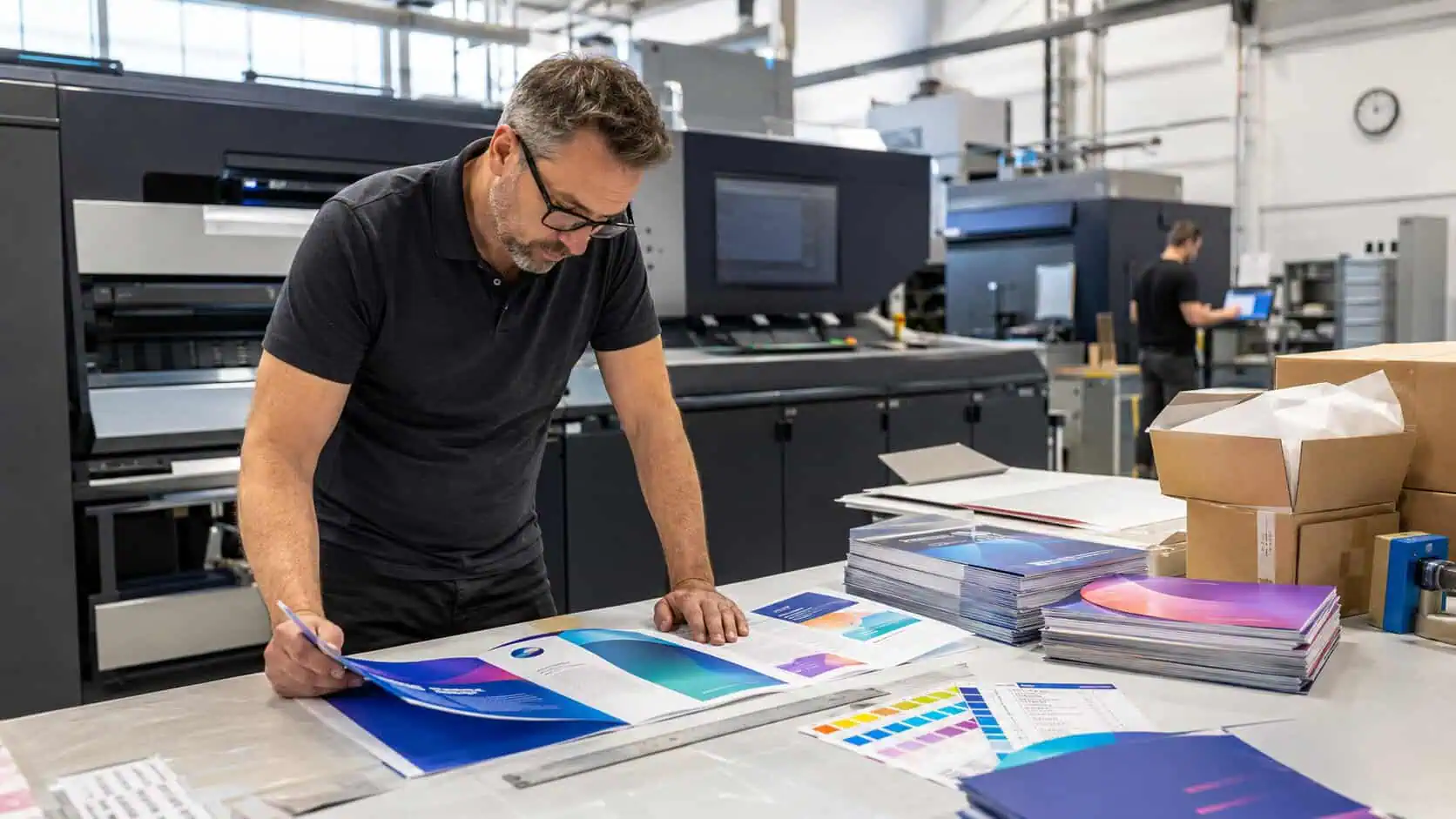
Start With the True Deadline
A print deadline is not always the day the press needs to run. It may be the day materials must arrive at an event, reach multiple offices, enter the postal system, or be placed into sales kits.
Begin by defining the in-hand date and working backward. Include time for delivery, packing, mailing, finishing, proof approval, production, and file review. A project described as needed Friday may actually need to leave the plant Wednesday.
- Where must the finished materials be delivered?
- Is the date fixed, or is there a usable delivery window?
- Does the job require mailing, kitting, or distribution?
- Will someone be available to approve proofs immediately?
- Are all stakeholders aligned on the final quantity and specifications?
Contact the Printer Before Every Detail Is Final
Early communication is one of the most effective ways to protect a short schedule. A printer can identify the decisions that affect lead time and suggest alternatives before the design is locked.
For example, a similar paper may be available sooner, a standard size may reduce finishing steps, or digital printing may be faster for a short run. These options are easier to use before artwork has been built around a specific stock or structure.
RoyerComm’s overview of digital printing and offset printing can help teams understand why quantity, quality, customization, and schedule influence the production method.
Know What Usually Controls Turnaround Time
Artwork and Prepress
Missing fonts, low-resolution images, incorrect bleeds, RGB color, incomplete links, or unclear dielines can stop a job before production begins. A clean file often saves more time than any later rush effort.
Use a print-ready PDF when appropriate and follow the preparation guidance in How to Prep Your File for Print.
Proofing
A proof protects accuracy, but the approval process can become a bottleneck. Decide who has final authority and make sure that person knows when the proof will arrive. Consolidate feedback into one response.
Paper and Materials
Specialty stocks, unusual sizes, custom substrates, envelopes, promotional items, and packaging materials may require additional sourcing time. Ask what is available before committing to a specification.
Finishing
Folding, binding, die-cutting, foil stamping, embossing, laminating, mounting, hand assembly, and other finishing steps can add meaningful time. A project with simple printing and complex finishing is still a complex project.
Mailing and Distribution
Address processing, inserting, sorting, postage preparation, kitting, freight, and multi-location shipping all need their own schedule. Production is not complete until the material reaches the intended destination.
Why In-House Production Can Help
Every handoff between vendors adds communication, transportation, scheduling, and quality-control requirements. One company may print the piece, another may finish it, and a third may mail or fulfill it. A delay at any stage can affect the entire project.
When prepress, printing, finishing, mailing, fulfillment, and distribution are coordinated under one roof, the schedule can be managed as one connected workflow. Teams can solve problems directly instead of waiting for information to move between vendors.
A commercial printer’s actual capabilities matter, especially for a rush project. RoyerComm’s printing equipment and capabilities page provides a useful example of the production, prepress, variable data, mailing, and finishing resources to review when evaluating a partner.
A Practical Rush-Project Workflow
- Confirm the final in-hand date, delivery locations, and quantity.
- Share the project concept and preliminary specifications with the printer.
- Ask which materials, sizes, and production methods fit the schedule.
- Assign one person to coordinate files, feedback, and approvals.
- Prepare and preflight the artwork before submission.
- Submit all files, fonts, links, mailing data, and instructions together.
- Review the proof immediately and consolidate corrections.
- Approve production only after checking copy, dates, contact information, folds, pagination, and quantities.
- Confirm shipping, mailing, or pickup details before the job is complete.
Ways to Simplify a Project Without Weakening It
A tight deadline may require tradeoffs, but simplification does not have to make the final product feel cheap.
- Use a readily available paper with a similar weight and finish
- Choose a standard finished size
- Reduce the number of versions
- Use digital printing for a shorter quantity or segmented run
- Replace a specialty effect with a coating or paper choice that is faster to produce
- Limit hand assembly or combine kit components
- Ship critical quantities first and the balance afterward
- Use local pickup or direct delivery for the most urgent portion
The best compromise is the one that protects the communication goal. Keep the elements that matter most to the audience and simplify details that add production time without adding equal value.
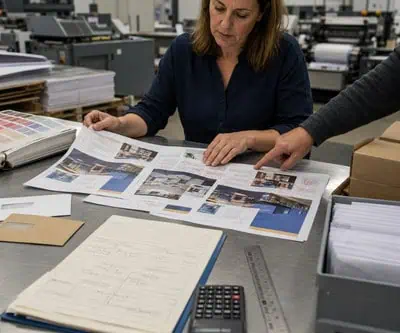
Common Causes of Avoidable Delays
- Requesting a quote without final size, quantity, stock, or finishing details
- Submitting files before copy and dates are approved internally
- Sending multiple conflicting rounds of corrections
- Using an outdated mailing list or incomplete address data
- Waiting until the proof arrives to involve the decision-maker
- Assuming a specialty material is immediately available
- Changing quantity or delivery destinations after production begins
- Treating mailing and fulfillment as an afterthought
For projects that will be mailed, review the full mailing and fulfillment process early. Data preparation, postage, sorting, inserting, and delivery planning should be part of the original timeline.
What to Send With a Rush Print Request
- Final quantity and any split quantities
- Finished size and flat size
- Paper or substrate preference
- Color requirements
- Finishing and binding details
- Print-ready files or packaged source files
- Required proof type
- Complete delivery addresses
- In-hand deadline and event date
- Mailing list or fulfillment instructions
- One primary contact with approval authority
Fast turnaround is most reliable when the project is complete, the decision-making path is clear, and every production stage is visible from the beginning. A rush request should create focus, not confusion.
Quality Still Matters on a Fast Schedule
Moving quickly does not mean skipping essential checks. The goal is to remove waiting, duplication, and preventable handoffs while preserving the controls that protect the final product.
A well-managed rush project still needs accurate files, clear specifications, proof approval, color awareness, finishing checks, and delivery confirmation. Speed comes from preparation and coordination, not from ignoring the steps that prevent expensive mistakes.

Frequently Asked Questions
How quickly can a commercial print job be completed?
Turnaround depends on quantity, printing method, materials, proofing, finishing, mailing, and delivery. A simple digital print job may move quickly, while custom finishing or specialty materials can extend the schedule.
What information should I provide when requesting rush printing?
Provide the quantity, size, paper, colors, finishing, artwork status, proof requirements, delivery locations, and true in-hand date. More complete specifications allow the printer to evaluate the schedule accurately.
Is digital printing always faster than offset printing?
Digital printing often has a shorter setup for small runs and variable versions, but the best method depends on the full job. Quantity, stock, finishing, quality requirements, and press availability all matter.
Can I skip a proof to save time?
Skipping a proof can create significant risk. Ask which proofing option fits the schedule. A digital PDF proof may be sufficient for some projects, while color-critical or structural work may require a physical proof.
What if the exact paper I selected is not available?
Ask for comparable stocks with similar weight, texture, brightness, opacity, or coating. A readily available alternative may preserve the intended look while protecting the deadline.
Does in-house mailing help shorten turnaround?
It can. Coordinating printing, finishing, data processing, inserting, postage preparation, and mailing through one workflow reduces handoffs and can make scheduling more predictable.
Working With a Tight Print Deadline?
Contact RoyerComm as early as possible. Our team can help you evaluate materials, production methods, finishing, mailing, and delivery options to build a realistic plan around your in-hand date.
Tell us about your project and deadline to get started.