
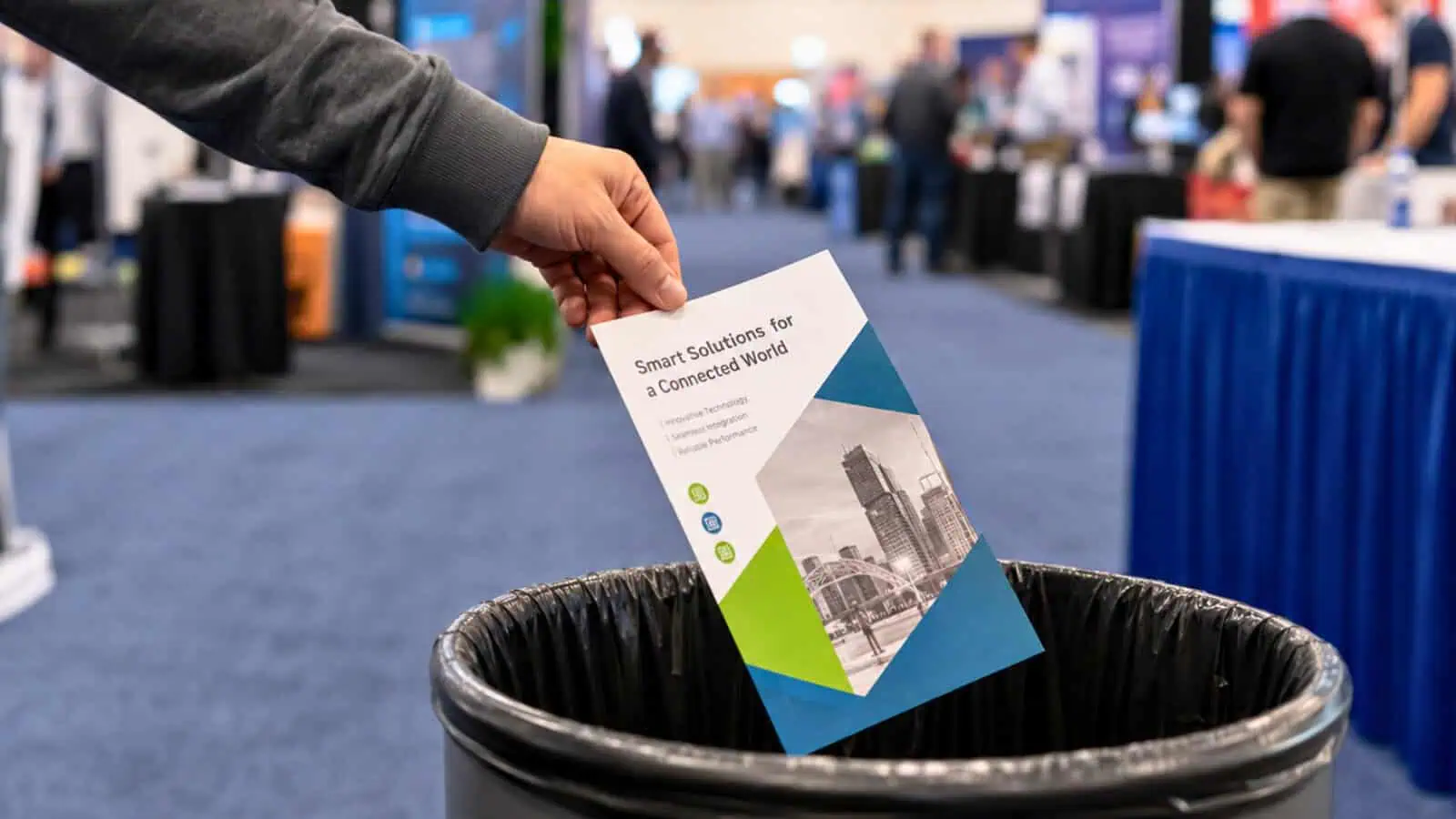
Trade shows create a lot of activity in a short amount of time. Booth traffic, quick conversations, product demos, giveaways, and networking all happen at once. In that environment, brochures are still a valuable tool, but only when they are designed with the attendee in mind.
The problem is that many trade show brochures are created from the company’s perspective instead of the visitor’s perspective. They become dense, generic, overly technical, or visually cluttered. As a result, they end up in tote bags, hotel trash cans, or recycling bins before the attendee ever gets home.
A strong brochure should not simply describe your business. It should help a busy person understand what you do, why it matters, and what next step to take. When done right, a brochure becomes a sales tool that continues working after the event ends.
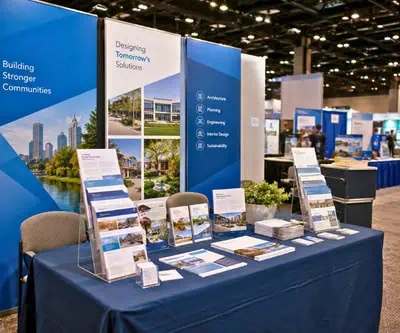
Why Trade Show Brochures Often Fail
Most attendees are collecting materials from dozens of exhibitors. They do not have time to read every handout on the show floor. If your brochure requires too much effort, it is easy to discard.
One common issue is trying to say everything. Many brochures are overloaded with paragraphs, product lists, company history, and jargon. While all of that information may be important somewhere, it does not belong in a first-touch trade show piece.
Another issue is lack of clarity. If someone looks at the front panel for three seconds, they should immediately understand who you help and what problem you solve. If they cannot, your piece may be forgotten.
Some brochures also fail because they look like every other brochure. Generic stock imagery, vague messaging, and predictable layouts make it difficult to stand out in a stack of materials.
What Attendees Actually Want
Most trade show attendees are looking for efficiency. They want to know:
- What does this company do?
- Is it relevant to my business?
- What makes them different?
- How do I follow up later?
Your brochure should answer those questions quickly and clearly.
Think of it less as a catalog and more as a guide. It should help the reader make a decision, remember your brand, or continue the conversation after the show.
How to Make a Brochure Worth Keeping
Keep the Message Focused
Instead of listing every service or product, choose the most relevant solutions for the audience attending that event. A focused brochure feels more useful than a broad one.
Use Clear Headlines
Headlines should communicate value, not just label sections. Replace headlines like “About Us” with messaging such as “Packaging Solutions for Growing Consumer Brands” or “Short Run Printing for Fast Turnarounds.”
Make It Easy to Scan
Use short paragraphs, subheads, white space, and simple charts or visuals where appropriate. Many attendees will skim first and read later.
Include Real Use Cases
Examples help readers picture how you solve problems. Instead of vague claims, show where your product or service fits in real business situations.
Give Them a Reason to Keep It
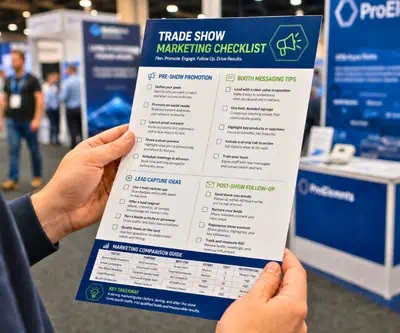
Useful checklists, planning tips, comparison guides, product specs, or timelines can increase retention. If the brochure offers practical value, it is less likely to be discarded.
Provide a Clear Next Step
Do not assume the reader knows what to do next. Include contact information, a QR code, a website page, or a simple invitation to schedule a conversation.
Trade Show Printing Still Matters
Even in a digital-first world, printed collateral remains powerful at events because it creates something tangible. People remember what they can hold, review later, and share internally with their team.
The key is quality over quantity. One thoughtful, well-designed brochure often outperforms stacks of generic handouts.
For companies investing in trade show marketing, print materials should support the sales conversation, not repeat your website word for word.
A Smarter Approach for Future Events
Before your next show, review your brochure honestly. Ask whether it is written for your internal team or for the attendee rushing to their next booth visit.
If it is too long, shorten it. If it is vague, sharpen it. If it blends in, improve the design. If it lacks value, add something practical.
Trade show brochures do not get thrown away because print no longer works. They get thrown away because many were never designed to be useful in the first place.
FAQs
Why do people throw away brochures at trade shows?
Most brochures are discarded because they are too long, unclear, overly promotional, or not relevant to the attendee’s needs. Visitors often collect many materials and keep only the most useful ones.
What should a trade show brochure include?
A strong brochure should include a clear value proposition, concise messaging, practical benefits, contact details, and a simple next step for follow-up.
How many pages should a trade show brochure be?
That depends on the purpose, but shorter is often better. A concise tri-fold or small multi-page booklet with focused content usually performs better than an overloaded piece.
Are printed brochures still effective for trade shows?
Yes. Printed brochures remain effective when they are well-designed, easy to understand, and useful after the event. They can reinforce brand credibility and support post-show sales follow-up.
Get in touch with our team to discuss maximizing your printed materials at the next trade show!