Eco-Friendly Printing: What Are Your Sustainable Options?
In today’s world, sustainability is no longer just a buzzword—it’s a responsibility. Whether you’re printing marketing materials, business cards, or packaging, choosing eco-friendly printing methods can help reduce your environmental impact without compromising quality. Fortunately, the printing industry has come a long way in offering sustainable solutions that are both effective and affordable.
If you’re looking to make your next print project a little greener, here are some of the most popular eco-friendly options available:
1. Recycled Paper
One of the simplest and most effective ways to reduce your environmental footprint is by choosing recycled paper. Made from post-consumer waste, recycled paper saves trees, conserves water, and uses less energy during production compared to virgin paper.
You can also look for paper certified by organizations like the Forest Stewardship Council (FSC), which ensures that the paper comes from responsibly managed forests.
2. Soy-Based Inks
Traditional petroleum-based inks contain volatile organic compounds (VOCs) that contribute to air pollution during the printing process. Soy-based inks, on the other hand, are a more sustainable alternative.
Derived from soybeans, these inks emit fewer VOCs and are easier to remove during recycling, making the entire process more environmentally friendly. Soy ink also produces rich, vibrant colors, which means you don’t have to sacrifice quality for sustainability.
3. Carbon-Neutral Printing
Some printers now offer carbon-neutral printing, where they offset the carbon emissions produced during the printing process by investing in renewable energy projects or reforestation efforts.
Working with a carbon-neutral print provider ensures that your print project contributes to global sustainability initiatives, balancing out the environmental cost of production and delivery.
4. Digital Printing
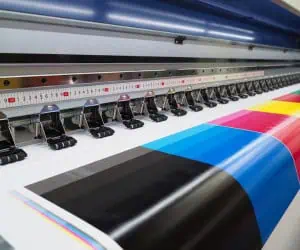
Compared to traditional offset printing, digital printing generates less waste and uses fewer chemicals. It’s ideal for short runs, reducing the need for excess inventory and unnecessary print materials. Digital printing can also be more energy-efficient and minimizes water usage.
5. Biodegradable or Recyclable Packaging
If your printed materials require packaging, consider biodegradable or recyclable options. Kraft paper, corrugated cardboard, and compostable sleeves are all eco-conscious alternatives that still offer a professional look and feel.
Choosing sustainable printing options is a smart move—for your brand and the planet. By opting for recycled paper, soy-based inks, carbon-neutral services, and eco-friendly packaging, you’re not just reducing waste—you’re sending a message that your business cares about the future.
Looking to go green with your next print project? Let’s talk about the best eco-friendly solutions for your needs.
Learn how franchises, dealerships, healthcare groups, universities and distributed teams can manage printed marketing materials, inventory, approvals and brand consistency with centralized print management.
Over the years we have accumulated a lot of knowledge about how to create compelling impactful marketing communications. We are here to answer any questions you might have or offer guidance to help take your project from good to GREAT! Give us a call today.
Used by Google Analytics to determine which links on a page are being clicked
30 seconds
_gat
Used to monitor number of Google Analytics server requests when using Google Tag Manager
1 minute
_gid
ID used to identify users for 24 hours after last activity
24 hours
_ga_
ID used to identify users
2 years
_ga
ID used to identify users
2 years
__utmx
Used to determine whether a user is included in an A / B or Multivariate test.
18 months
__utmv
Contains custom information set by the web developer via the _setCustomVar method in Google Analytics. This cookie is updated every time new data is sent to the Google Analytics server.
2 years after last activity
__utmz
Contains information about the traffic source or campaign that directed user to the website. The cookie is set when the GA.js javascript is loaded and updated when data is sent to the Google Anaytics server
6 months after last activity
__utmc
Used only with old Urchin versions of Google Analytics and not with GA.js. Was used to distinguish between new sessions and visits at the end of a session.
End of session (browser)
__utmb
Used to distinguish new sessions and visits. This cookie is set when the GA.js javascript library is loaded and there is no existing __utmb cookie. The cookie is updated every time data is sent to the Google Analytics server.
30 minutes after last activity
__utmt
Used to monitor number of Google Analytics server requests
10 minutes
__utma
ID used to identify users and sessions
2 years after last activity
_gac_
Contains information related to marketing campaigns of the user. These are shared with Google AdWords / Google Ads when the Google Ads and Google Analytics accounts are linked together.
90 days
Marketing cookies are used to follow visitors to websites. The intention is to show ads that are relevant and engaging to the individual user.