
What Is Every Door Direct Mail?
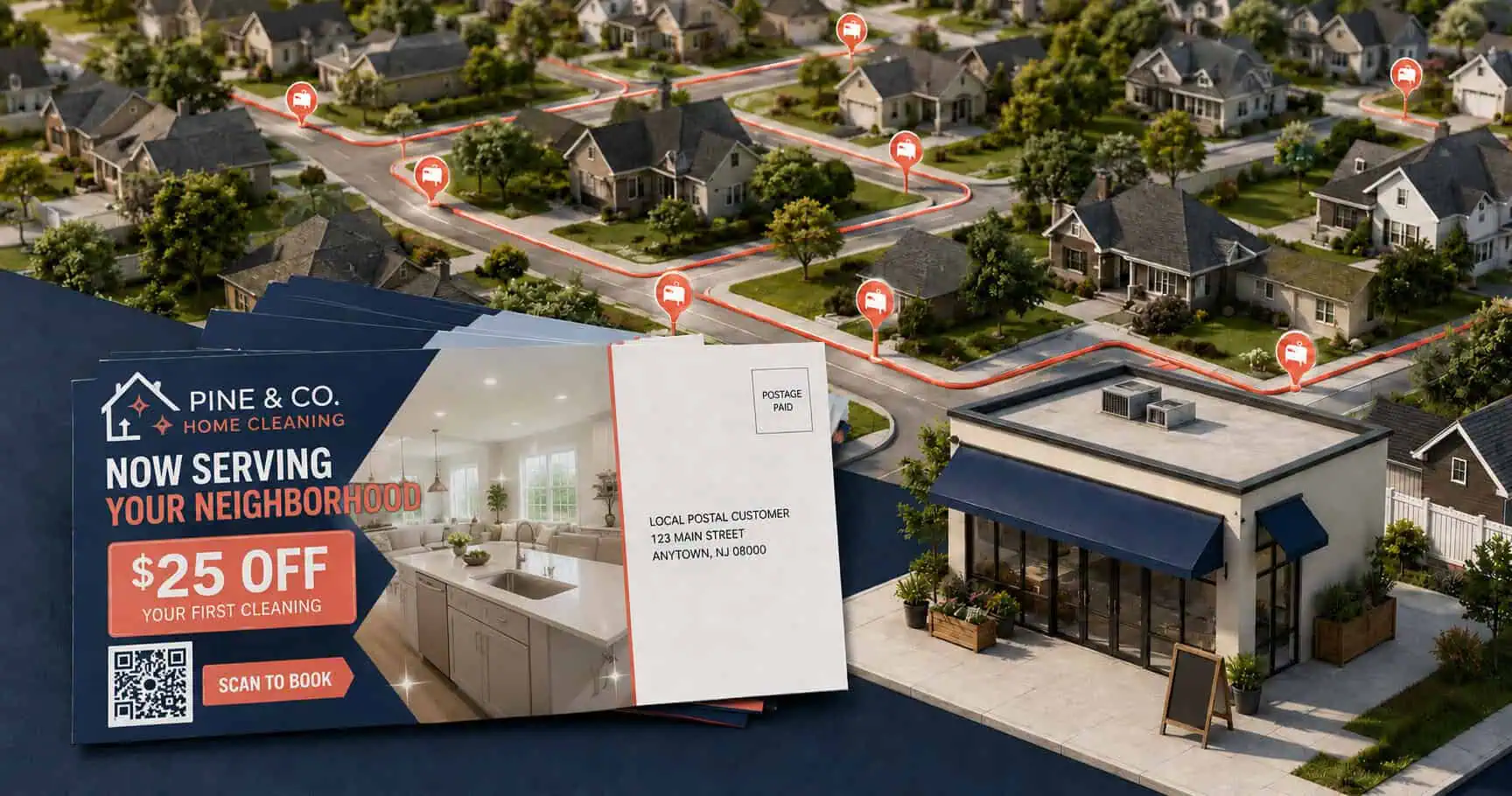
Every Door Direct Mail is a United States Postal Service program designed for broad local coverage. Instead of addressing each piece to a named person, a business selects postal carrier routes and sends one mailpiece to nearly every eligible residential address on those routes.
That structure makes EDDM different from list-based direct mail. Traditional direct mail begins with a database of customers or prospects. EDDM begins with geography. For a new business with no customer mailing list, geography can be a practical starting point.
EDDM is one option within a larger direct mail and fulfillment strategy. The right approach depends on whether the campaign needs broad neighborhood reach, precise audience targeting, personalization, or a combination of those goals.
When EDDM Is a Good Fit
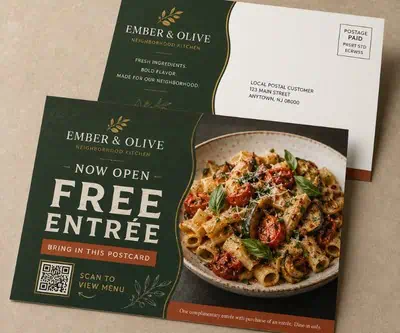
EDDM works best when location is a meaningful predictor of who may become a customer. A restaurant, home service company, medical practice, fitness studio, retailer, childcare provider, or newly opened location often serves people within a defined radius.
- New businesses that do not yet have an established customer database
- Grand openings, relocations, and new service-area announcements
- Businesses that serve households within specific ZIP codes or neighborhoods
- Seasonal promotions that appeal to a broad local audience
- Local awareness campaigns where reach matters more than individual personalization
A neighborhood mail campaign can also support digital marketing. Someone may see a mailpiece, recognize the business later in search results, and feel more comfortable clicking because the name is already familiar.
When a Targeted Mailing List May Be Better
EDDM is broad by design. That is an advantage when most households in an area could plausibly need the service. It is less efficient when the ideal audience is narrow.
A purchased, compiled, or customer-based mailing list may be more appropriate when the campaign needs to reach specific industries, job titles, age groups, property types, past customers, donors, members, or other defined segments. Variable data printing can then personalize names, offers, locations, or messages.
For campaigns that require list preparation, address standardization, personalization, sorting, and postage coordination, review the steps involved in mailing and fulfillment services.
How to Select Carrier Routes
The success of an EDDM campaign depends heavily on route selection. A route should be evaluated as a group of households, not simply as a ZIP code on a map.
- Distance from the business or service location
- Number of residential deliveries on the route
- Housing density and neighborhood layout
- Household characteristics relevant to the offer
- Drive time, delivery radius, or technician coverage
- Whether the route overlaps existing customers or underdeveloped areas
Avoid selecting routes solely because they are nearby. A route with fewer but better matched households may be more useful than a route with more addresses that are unlikely to respond.
Planning the Mailpiece
Use a Format That Qualifies
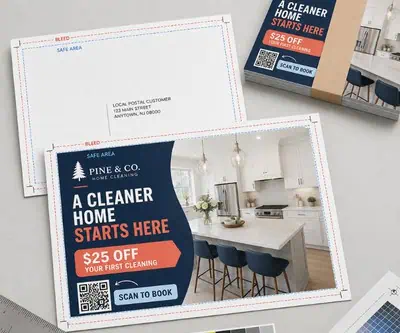
EDDM mailpieces must meet postal size and preparation requirements. Before designing, confirm the current USPS dimensions, route documentation, bundling rules, and drop-off requirements. Designing first and checking eligibility later can lead to expensive resizing or reprinting.
Make the Message Understandable in Seconds
A recipient should quickly understand who the business is, what it offers, why the offer matters, and what to do next. A crowded postcard with five competing calls to action often performs worse than a focused piece with one primary action.
- A clear headline tied to a local need
- One primary offer or reason to respond
- A visible phone number, URL, or QR code
- Service area or location information
- An expiration date when urgency is appropriate
- Trust signals such as years in business, credentials, reviews, or guarantees
Design for the Mailbox, Not Only the Screen
Print design requires attention to trim, bleed, resolution, color mode, and postal space. RoyerComm’s guide on how to prepare a file for print explains the technical basics that help prevent production delays.
How to Track EDDM Results
Broad local mail should still be measurable. Tracking does not need to be complicated, but it should be planned before the piece is printed.
- A dedicated landing page created for the campaign
- A unique QR code with analytics
- A campaign-specific phone number
- A coupon code or offer code
- A required form field asking how the customer heard about the business
- Point-of-sale tracking for redeemed offers
Measure more than immediate sales. Calls, website visits, quote requests, coupon redemptions, new email subscribers, foot traffic, and branded searches can all show whether the campaign created awareness.
Budgeting and Testing
An EDDM budget includes design, printing, postage, preparation, transportation, and response handling. The cheapest mailpiece is not necessarily the most economical if weak creative produces little response.
A practical first campaign can test a limited group of routes, one offer, and one format. Results can then guide the next mailing. Test one major variable at a time, such as the offer, headline, route selection, or mail date, so the results remain understandable.
The printing method may depend on quantity and versioning. Digital printing is often useful for shorter runs and multiple versions, while offset printing may be cost effective for larger quantities that require consistent color and premium finishing.
A Simple EDDM Planning Checklist
- Define the geographic area the business can realistically serve.
- Identify the offer and the single most important response action.
- Review carrier routes and estimated residential deliveries.
- Confirm that the mailpiece format qualifies for EDDM.
- Prepare artwork with correct bleed, resolution, and postal space.
- Print and bundle the pieces according to current postal requirements.
- Launch a tracking page, QR code, phone number, or coupon.
- Record responses and compare performance by route or mailing wave.
EDDM is most useful when it is treated as a measurable local marketing campaign, not simply a large batch of postcards. Geography creates the reach. The offer, creative, timing, and follow-up determine what that reach produces.
Frequently Asked Questions
Do I need a mailing list for Every Door Direct Mail?
No. EDDM is designed to reach eligible addresses on selected postal carrier routes without using a traditional named mailing list.
Can EDDM target a specific ZIP code?
It can target carrier routes within a ZIP code. Selecting an entire ZIP code may include multiple routes, so route-level review is usually more useful than choosing only by ZIP code.
Is EDDM only for postcards?
Postcard-style flat mailpieces are common, but the piece must meet current USPS EDDM size and preparation standards. Confirm the requirements before finalizing the design.
Can an EDDM mailer be personalized?
EDDM is generally addressed to a broad recipient designation rather than an individual name. Businesses that need one-to-one personalization should consider list-based direct mail with variable data printing.
How often should a business send EDDM?
There is no universal frequency. The right schedule depends on the buying cycle, offer, seasonality, budget, and response data. Repetition can improve recognition, but each mailing should have a clear purpose.
How can a new business tell whether EDDM worked?
Use a dedicated phone number, landing page, QR code, coupon, or intake question. Compare responses and revenue with the full campaign cost, and record results by route when possible.
Have questions about Every Door Direct Mail? Ready to get started? Get in touch with the RoyerComm team today!