
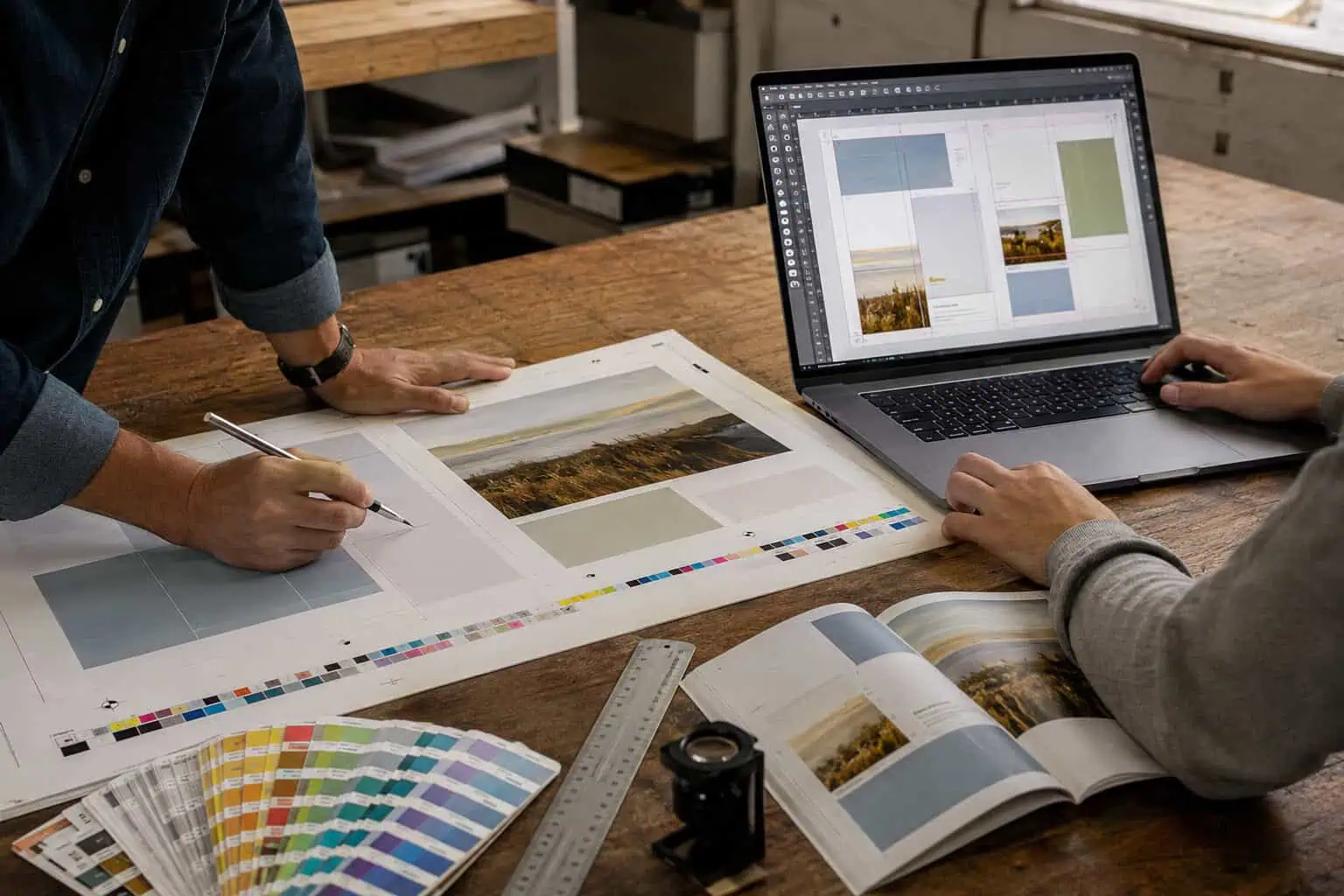
Creative Design and Production Design Are Different Jobs
Graphic design covers a wide range of work. A brand designer may build a visual identity. An agency may develop campaign concepts. An internal creative team may create layouts, messaging systems, and templates. A printer’s design and prepress team often enters later, when an approved idea must become a reliable physical product.
That distinction is important. Asking a printer for design support does not necessarily mean replacing the original designer. It may mean helping that designer, marketing manager, or business owner translate an approved concept into production-ready artwork.
The most productive relationships respect both sides: creative professionals protect the idea and brand, while print production specialists protect the technical execution.
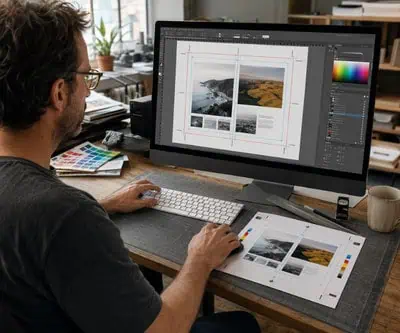
What In-House Print Design Support Can Include
Print-Ready File Preparation
A production designer can check or correct bleed, trim, safety margins, color mode, image resolution, font embedding, transparency, overprint, page order, and other press requirements.
RoyerComm’s guide on preparing files for print explains common requirements such as PDF formats, CMYK color, 300 dpi images, bleeds, and font handling.
Resizing Approved Artwork
A campaign may need to move from a brochure to a postcard, banner, sell sheet, display panel, envelope, or social graphic. Resizing is rarely a matter of stretching the original file. The hierarchy, cropping, copy length, folds, and viewing distance may need to be adjusted.
Versioning and Localization
One approved design may need dozens of versions for offices, representatives, events, languages, products, or offers. A production team can apply controlled changes while protecting the master layout.
Variable Data and Personalization
Personalized direct mail and one-to-one print require artwork that can accept changing names, images, offers, URLs, QR codes, or location information. The production setup needs to account for the longest fields and every possible variation.
Dielines and Structural Templates
Packaging, pocket folders, custom shapes, displays, and other converted products often need a precise dieline. A printer can provide or help build the technical template so the creative team designs within the real production structure.
Last-Mile Corrections
Sometimes the need is small but urgent: changing a date, replacing a logo, correcting a phone number, extending a bleed, outlining a font, or preparing a second version. In-house support can keep the project moving without reopening a larger creative engagement.
When a Freelance Designer or Agency Should Lead
A printer is not automatically the best choice for every design need. Strategic and concept-driven work is often best led by the professionals who understand the brand, audience, campaign, and broader communications plan.
- Brand identity and logo development
- Campaign concepts and messaging platforms
- Website and digital experience design
- Complex editorial art direction
- Original illustration or photography direction
- Long-term brand system development
- Major rebrands or repositioning
The printer can still participate early by advising on materials, folds, finishing, color, binding, mailing, or structural limitations. That collaboration helps the creative team make informed decisions without shifting ownership of the concept.
When Printer-Side Support Is Especially Helpful
Your Team Has a Temporary Bandwidth Problem
A product launch, event season, acquisition, rebrand rollout, or large sales initiative can create more production work than the internal team can absorb. Printer-side designers can handle adaptation and execution while the core team remains focused on higher-level creative work.
You Have Finished Artwork but Not a Print-Ready File
A small business may have a logo, copy, photographs, and a general layout but no production file. The printer can identify what is usable, what needs to be rebuilt, and what technical decisions remain.
The Piece Has Unusual Production Requirements
Folds, die-cuts, coatings, binding, packaging, large-format installation, variable data, and postal regulations can create constraints that are not visible in a standard design file.
Many Similar Versions Are Needed
Versioning can consume substantial creative-team time. Once the master design is approved, a production workflow can create localized or personalized variations more efficiently.
The Deadline Is Tight
Direct access to the production team can reduce back-and-forth when a file problem is discovered. The goal is not to bypass the designer, but to resolve technical issues with the right people in the same conversation.
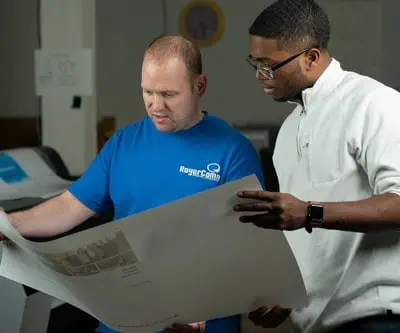
How Designers and Printers Can Collaborate Without Friction
- Agree on roles before production begins.
- Share printer specifications, dielines, and templates early.
- Identify which changes require creative approval.
- Keep one approved master file and a clear naming system.
- Package fonts, links, and supporting assets when source files are required.
- Use one consolidated correction list rather than conflicting email threads.
- Confirm who owns final proofreading and content accuracy.
- Archive the approved production file for future versions.
A printer should not make subjective brand changes without approval. A designer should not be expected to anticipate every press, bindery, mailing, or finishing requirement. A clear division of responsibility protects both the relationship and the finished product.
Questions to Ask Before Requesting Design Support
- Do we need a new creative concept or production execution?
- Is there an approved brand guide and master artwork?
- What file formats and assets are available?
- Will the piece require folds, bleeds, dielines, mailing panels, or variable fields?
- How many versions are needed?
- Who will approve design changes and proofs?
- Does the printer need to coordinate with an outside designer or agency?
- What is the final delivery format and deadline?
These questions help determine whether the task belongs with a brand designer, an agency, an internal creative team, a print production designer, or a combination of them.
Examples of Useful Printer-Side Design Tasks
- Converting a digital flyer into a print-ready postcard
- Building business card versions for a new group of employees
- Adapting a sell sheet for several product lines
- Adding postal clear zones and indicia placement
- Creating localized brochures for multiple offices
- Preparing artwork for a pocket folder or folding carton dieline
- Checking image resolution and CMYK conversion
- Setting up variable names, offers, images, or QR codes
- Reflowing approved content into a new finished size
- Producing event signage from an existing campaign system
Many of these tasks touch both design and production. The digital printing services, offset printing services, and mailing and fulfillment services involved may change how the artwork should be built.
A Helpful Way to Frame the Relationship
The question is not whether the printer or designer is more important. The question is which expertise is needed at each stage.
Creative teams turn strategy into an idea people can understand and remember. Print production teams turn that idea into a physical object that can be manufactured consistently, mailed correctly, finished cleanly, and delivered on time.
In-house graphic design support is most valuable when it creates a bridge between those stages. It gives businesses and creative professionals technical guidance, production capacity, and last-mile problem solving without diminishing the role of the people who created the work.
Frequently Asked Questions
Will a printer’s graphic design team replace my freelance designer?
It should not have to. Printer-side support is often used for production preparation, resizing, versioning, technical corrections, and overflow work while the freelance designer retains creative ownership.
What is the difference between graphic design and prepress?
Graphic design focuses on visual communication and layout. Prepress focuses on preparing and checking files for accurate production, including color, resolution, bleed, fonts, page setup, and press requirements.
Can a printer fix a file that is not print ready?
Often, yes. The amount of work depends on the file format, image quality, missing fonts, bleeds, color setup, and whether editable source files are available.
Should I involve the printer before the design is finished?
Yes, especially for unusual sizes, folds, packaging, direct mail, specialty finishes, binding, or large-format work. Early technical input can prevent redesign later.
Can a printer create multiple localized versions of one design?
Yes. With an approved master layout, a production design team can often create versions for locations, representatives, products, offers, languages, or events.
Who is responsible for proofreading?
Responsibility should be agreed upon before production. The client should carefully approve names, dates, prices, phone numbers, URLs, legal copy, and other content even when the printer assists with layout or file preparation.
RoyerComm is here to help you navigate your next project. Get in touch with our team today!