
Offset Printing vs. Digital Printing: Which Is Right for Your Project?
If you are preparing brochures, postcards, catalogs, direct mail, sales materials, booklets, folders, newsletters, or other professionally printed materials, one of the first production decisions is whether to use offset printing or digital printing.
Both methods can produce excellent results.
The difference is that they solve different problems.
A company printing 25,000 identical brochures may have very different priorities from a marketing team that needs 250 personalized postcards delivered next week. The first project may benefit significantly from offset printing, while the second could be an ideal candidate for digital production.
Understanding the difference between offset and digital printing can help you control costs, improve print quality, meet deadlines, and avoid designing a project around the wrong production process.
What Is Offset Printing?
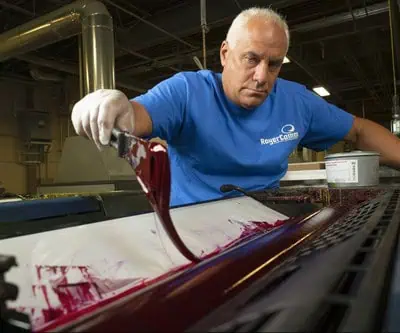
Offset printing is a traditional commercial printing process in which an image is transferred from a printing plate to a rubber blanket and then onto the paper or other printing surface.
Unlike many digital presses, the image is not transferred directly from a digital file onto the sheet.
Offset printing requires more initial preparation, including creating plates and setting up the press. That setup makes offset printing less economical for very small quantities. However, once the press is running, it can produce large quantities efficiently and with extremely consistent results.
This is why offset printing is commonly used for:
- Brochures
- Catalogs
- Magazines
- Newsletters
- Pocket folders
- Postcards
- Sell sheets
- Direct mail
- Booklets
- Corporate marketing materials
- High-volume promotional printing
For larger quantities, offset printing can deliver exceptional image reproduction and increasingly attractive costs per printed piece.
What Is Digital Printing?
Digital printing sends artwork directly from a digital file to a digital printing press without requiring traditional printing plates.
That significantly reduces setup.
Because there is less front-end preparation, digital printing is particularly effective for shorter print runs and projects that need to move through production quickly.
Digital printing is commonly used for:
- Short-run brochures
- Flyers
- Postcards
- Invitations
- Personalized direct mail
- Sales collateral
- Training materials
- Presentation materials
- Short-run booklets
- Multiple versions of the same marketing piece
- Variable data printing
Modern commercial digital presses can produce extremely high-quality results, making digital printing an increasingly practical option for professional marketing materials.
Offset vs. Digital Printing at a Glance
Factor | Offset Printing | Digital Printing |
Best quantity | Medium to large runs | Short to medium runs |
Setup | More extensive | Minimal |
Cost per piece | Usually decreases significantly at higher quantities | Often economical for smaller quantities |
Turnaround | Longer setup may be required | Often faster for short runs |
Personalization | Limited | Excellent |
Variable data | Not typically ideal | Excellent |
Color consistency | Exceptional | Excellent with modern presses |
Specialty inks | Greater flexibility | More limited depending on equipment |
Paper options | Extensive | Extensive, but press-dependent |
Specialty coatings | Excellent | Available, but options can vary |
Versioning | More expensive | Very efficient |
The exact crossover point between digital and offset printing varies considerably based on the job. Quantity is important, but it should never be the only factor used to make the decision.
When Does Offset Printing Make More Sense?
Offset printing becomes especially attractive when you need to produce a significant quantity of the same printed piece.
The initial press setup creates a fixed production cost. Once that setup is complete, however, producing additional impressions becomes increasingly efficient.
As quantity rises, the cost per printed piece can decline.
For example, printing 100 brochures on an offset press would rarely make economic sense because the setup costs would be spread across only 100 pieces.
Printing 50,000 brochures creates a completely different cost equation.
This is one reason commercial printers often recommend offset printing for larger production runs.
Offset printing may be the better choice when:
- You need thousands or tens of thousands of identical pieces
- Color consistency is extremely important
- Your project uses specific Pantone or PMS colors
- You require specialty coatings or finishing
- You want access to a broader range of substrates or paper stocks
- The project will be produced repeatedly in significant quantities
- You want to minimize unit cost on a high-volume print run
RoyerComm generally recommends digital production for short runs with tight turnaround requirements, while medium and larger runs, particularly those involving specialty coatings, may be better suited for offset production.
When Does Digital Printing Make More Sense?
Digital printing becomes especially valuable when flexibility matters more than high-volume production efficiency.
Because there are no traditional plates to manufacture, a digital press can move from a finalized print file into production much more quickly.
That makes digital printing ideal for shorter quantities.
But short-run printing is only one advantage.
Digital printing also makes it possible to change information from one printed piece to another.
That opens the door to personalized marketing.
Digital Printing and Variable Data Personalization
One of the biggest differences between offset and digital printing is the ability to use variable data printing.
Variable data allows information within a design to change automatically from piece to piece.
A direct mail campaign could potentially include:
- Different customer names
- Different offers
- Different sales representatives
- Different photographs
- Different geographic locations
- Different QR codes
- Different calls to action
- Different landing page URLs
Instead of printing 5,000 identical postcards, you could produce thousands of individually customized pieces.
This makes digital printing particularly valuable for targeted direct mail, account-based marketing, sales campaigns, membership communications, fundraising, and customer retention programs.
Personalization and shorter print runs are becoming increasingly important as companies look for ways to make printed marketing communications more relevant to individual recipients.
Which Has Better Print Quality: Offset or Digital?
Historically, offset printing had a clear reputation for producing superior commercial print quality.
Today, the difference is considerably smaller.
Modern production digital presses can produce crisp text, detailed imagery, rich color, and professional marketing materials that would have been difficult for digital equipment to achieve years ago.
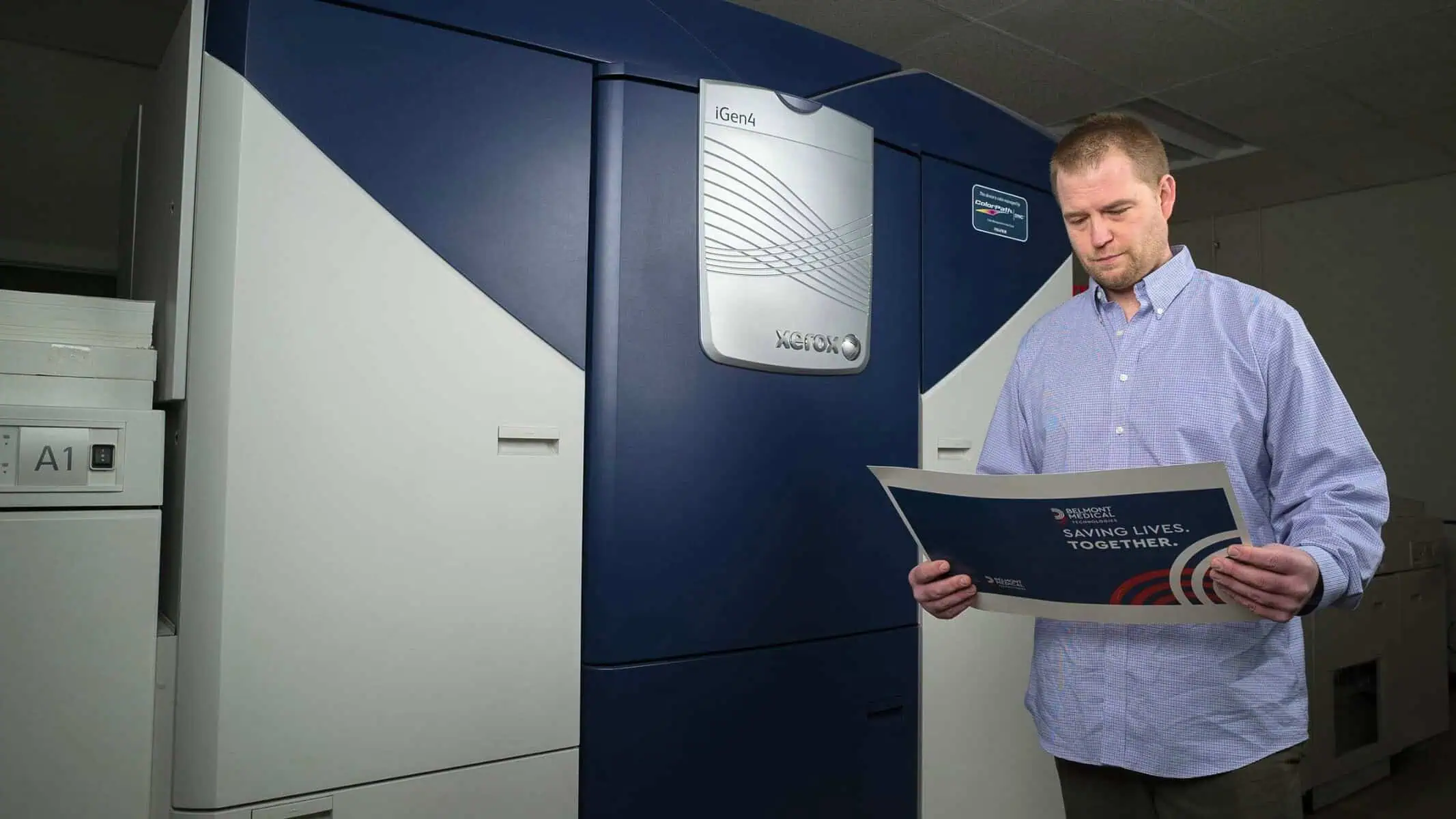
RoyerComm, for example, operates both commercial offset presses and advanced digital equipment, including HP Indigo, Canon, Xerox, and Heidelberg printing technologies.
Offset printing can still have advantages for projects where extremely precise color reproduction is required across very large quantities.
It can also be preferable when specific spot colors or specialty printing techniques are involved.
However, many everyday commercial printing projects can achieve outstanding results using either technology.
The better question is not simply:
Which printing process has better quality?
It is:
Which process can achieve the quality required for this specific project at the right quantity, cost, and turnaround time?
Offset vs. Digital Printing for Color Accuracy
Color is another major consideration when comparing digital and offset printing.
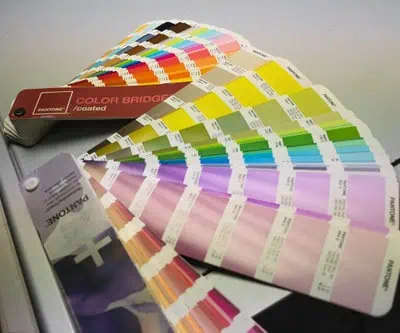
Offset presses commonly use CMYK inks and can incorporate specific Pantone Matching System colors when exact brand reproduction is required.
This can be particularly important for established brands with strict corporate identity standards.
Digital printing typically reproduces color through its own press-specific color system. Modern digital color management has become highly sophisticated, but exact reproduction of some specialty colors can depend on the equipment being used.
For a typical brochure, postcard, booklet, or marketing piece, digital color may be more than sufficient.
For a color-critical national campaign involving hundreds of thousands of pieces, offset production may offer additional advantages.
A professional commercial printer can evaluate your artwork, brand colors, proofing requirements, and intended use before recommending the most appropriate production method.
Which Printing Method Has a Faster Turnaround?
Digital printing generally has the advantage when speed is the primary concern, particularly for smaller quantities.
Since digital printing eliminates traditional plate production and reduces press setup, files can often move into production quickly after proof approval.
That makes digital printing especially useful for:
- Upcoming events
- Last-minute sales presentations
- Short-run marketing materials
- Conference handouts
- Emergency replacement materials
- Rapidly changing offers
- Time-sensitive direct mail
Offset printing requires additional setup, but that does not necessarily mean an offset project will take dramatically longer.
Project timing also depends on:
- Paper availability
- Quantity
- Proofing
- Folding
- Cutting
- Binding
- Die cutting
- Coating
- Mailing
- Fulfillment
- Shipping requirements
For tight deadlines, RoyerComm recommends involving the printer as early as possible so production, finishing, mailing, and delivery can be planned together.
Is Digital Printing Cheaper Than Offset Printing?
Sometimes.
Digital printing is often less expensive for small quantities because there are fewer setup costs.
Offset printing can become less expensive as quantity increases.
Think about printing costs in two categories:
Setup Cost
Offset printing typically has a higher initial setup cost.
Digital printing typically has a lower setup cost.
Unit Cost
Once an offset press is running, the incremental cost of producing additional pieces can become very economical.
This creates a crossover point where offset printing may become more cost-effective than digital production.
There is no universal quantity where this happens.
The most economical method depends on variables such as:
- Finished size
- Number of pages
- Paper stock
- Ink coverage
- Quantity
- Number of versions
- Finishing
- Coatings
- Binding
- Mailing
- Delivery
Instead of choosing a printing process based on a generic quantity rule, ask your commercial printer to compare production options for your specific job.
Do Paper Options Differ Between Offset and Digital Printing?
They can.
Offset printing traditionally provides access to a very broad range of commercial printing papers, specialty stocks, textures, finishes, thicknesses, and coatings.
Digital presses have become increasingly versatile, but each press has specifications regarding paper size, thickness, coating, and other characteristics.
If paper is an important part of your design, discuss the stock before finalizing the artwork.
Your printer may be able to recommend:
- Coated paper
- Uncoated paper
- Gloss stock
- Matte stock
- Silk or satin finishes
- Textured papers
- Heavy cover stock
- Recycled paper
- Specialty substrates
Paper can dramatically affect how color, photography, typography, and finishing techniques appear in the finished product.
What About Specialty Finishing?
Offset printing is often an excellent choice for projects involving premium finishing and specialty production.
Options may include:
- Aqueous coating
- UV coating
- Soft-touch finishes
- Die cutting
- Embossing
- Foil stamping
- Specialty binding
- Scoring
- Folding
These finishing techniques can transform a standard printed piece into something that feels significantly more premium.
RoyerComm offers offset printing along with extensive in-house finishing, bindery, die cutting, mailing, and fulfillment capabilities.
Digital projects can also incorporate many finishing processes.
The key is to evaluate the complete product rather than selecting the printing method in isolation.
What If You Need Several Versions of the Same Piece?
This is one area where digital printing can have a major advantage.
Imagine a company needs sales brochures for 25 different branch locations.
The overall design is identical, but each brochure contains a different:
- Address
- Phone number
- Sales representative
- Photograph
- Offer
- Service territory
Using offset printing could require separate plates or production setups for multiple versions.
Digital printing allows the file information to change electronically.
That can make versioned printing much more economical.
The same principle applies to:
- Franchise marketing
- Multi-location companies
- Dealership groups
- Universities
- Healthcare organizations
- Financial services companies
- Sales organizations
- Retail locations
Digital printing gives distributed organizations the ability to create localized materials while maintaining consistent branding.
Can Offset and Digital Printing Be Used Together?
Absolutely.
It does not always have to be one or the other.
Sophisticated print campaigns can sometimes use both processes.
A high-volume component might be produced offset, while smaller personalized or versioned components are printed digitally.
The goal should be to select the most efficient production method for each part of the project.
Working with a commercial printing company that offers both digital and offset capabilities makes this significantly easier because the recommendation can be based on the project instead of being limited by the equipment available.
Questions to Ask Before Choosing Offset or Digital Printing
Before requesting a print quote, gather as much information as possible about the project.
Start with these questions:
How many pieces do we need?
Quantity is one of the biggest factors affecting production method and pricing.
Will every piece be identical?
If names, images, offers, locations, or other information will change, digital printing may make more sense.
When do we need the finished materials?
A tight deadline may affect production recommendations.
How important is exact color matching?
Projects involving strict corporate colors or spot inks may require additional planning.
What paper do we want?
Paper selection can influence both production method and cost.
Does the project require specialty finishing?
Coatings, die cutting, embossing, foil stamping, folding, binding, and other finishing processes should be considered before production begins.
Will the materials be mailed or distributed?
Printing is often only one part of the workflow. Mailing, fulfillment, kitting, and shipping can affect both scheduling and production strategy.
Offset Printing vs. Digital Printing: Which Should You Choose?
Choose digital printing when you need short quantities, fast production, personalization, variable data, or multiple versions.
Choose offset printing when you need larger quantities, exceptional consistency, premium production options, specialty coatings, or lower unit costs at scale.
But there is rarely a universal answer.
The most cost-effective production method depends on the entire project.
At RoyerComm, both digital and offset printing are available along with finishing, mailing, fulfillment, large format printing, packaging, marketing portals, and other commercial printing services.
That means your printing method can be selected around what your project actually requires.
If you are unsure whether your next project should be printed digitally or offset, contact RoyerComm with the quantity, finished size, paper preferences, color requirements, finishing specifications, deadline, and artwork.
The team can help evaluate the most practical approach.
Frequently Asked Questions About Offset vs. Digital Printing
What is the main difference between offset and digital printing?
Offset printing transfers ink from printing plates through a blanket and onto the printed surface, while digital printing sends artwork directly from a digital file to a digital press. Offset typically requires more setup, while digital production can begin more quickly.
Is offset printing better than digital printing?
Neither method is universally better. Offset printing is often ideal for medium to large quantities, color-critical projects, and specialty finishing. Digital printing is often better for short runs, tight deadlines, personalization, and projects containing multiple versions.
What quantity should I print before choosing offset printing?
There is no single minimum quantity that applies to every project. The crossover point depends on finished size, paper, color, page count, finishing, and other production requirements. A printer can compare digital and offset pricing for your specific specifications.
Is digital printing good enough for professional marketing materials?
Yes. Modern commercial digital printing equipment can produce extremely high-quality brochures, postcards, booklets, sales materials, direct mail, and other professional marketing pieces.
Which is cheaper, offset or digital printing?
Digital printing is frequently more economical for smaller print runs because setup costs are lower. Offset printing can become more economical at higher quantities because the cost per piece decreases as production volume increases.
Which printing method is faster?
Digital printing is often faster for short-run projects because it does not require conventional printing plates. However, total turnaround also depends on paper availability, proofing, finishing, binding, mailing, fulfillment, and delivery.
Can digital printing personalize every printed piece?
Yes. Variable data printing allows text, images, offers, names, addresses, QR codes, and other elements to change from one printed piece to another, making digital printing ideal for personalized direct mail and targeted marketing campaigns.
Does offset printing produce better colors?
Offset printing can provide exceptional color consistency and is particularly useful when precise spot colors or PMS colors are required. Modern digital presses can also provide excellent color reproduction for most commercial printing applications.
Can both offset and digital printing use specialty paper?
Yes, although available paper stocks depend on the specific printing equipment and job specifications. Offset presses typically accommodate an extensive range of commercial stocks, while modern digital presses support an increasingly broad range of coated, uncoated, textured, and specialty papers.
How do I know which printing process is right for my project?
Provide your printer with the quantity, size, paper, number of pages, color requirements, personalization requirements, finishing, deadline, mailing needs, and delivery information. A commercial printer with both offset and digital capabilities can determine which production method provides the best combination of quality, speed, and cost.
RoyerComm is here to help deciding whether offset or digital printing is best for your next project. Get in touch with our team today to discuss!